
The History Of McDaids Bottling Stores, Ramelton
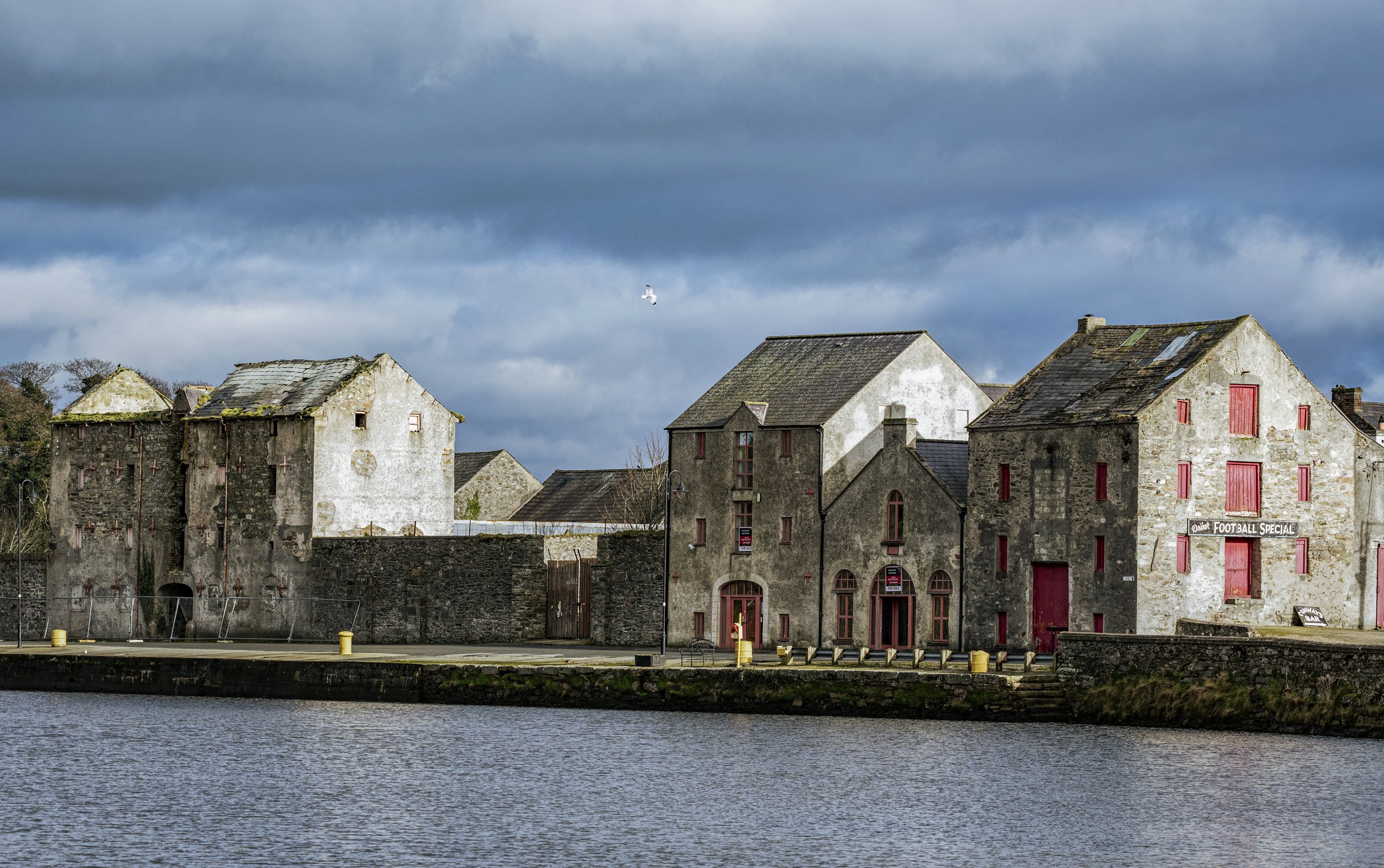
The familiar quayside warehouses
The quay in Ramelton, in particular the buildings we often refer to as the McDaids warehouses or Swilly Bottling Stores, is one of the most familiar manmade sights in all of Donegal: you know, those riverside stone walls and red doors that feature on so many postcards and, these days, wedding photos. For a long time in recent memory that’s all they were, but the buildings are more active these days – and they, and the quay on which they sit, have longer histories than we might suspect.
The quay itself is on the site of a castle built in the 15th century (and rebuilt in the 17th century). The original castle, perched in a perfect spot where the River Lennon meets Lough Swilly, was yet another stronghold for the powerful O’Donnell clan, who dominated this whole area from the 13th century. The town’s Irish name — Ráth Mealtain, meaning “the fort of Mealtan”, Mealtan being an early Gaelic chieftain even before the 15th century — reflects its early identity as a fortified site and it’s likely that the castle served as both the residence of the clan’s heir and a key defensive position in their territory.
Following the Flight of the Earls in 1607, the old Gaelic order was dismantled. In 1610, Sir William Stewart, a Scottish planter granted 1,000 acres in the area by the Crown, established the town of Ramelton (he is the same person named in Newtownstewart and Fort Stewart). By 1619, he had built a new residence on the site, a three-and-a-half storey castle with a turret reaching 42 feet high, complete with adjoining houses and an enclosing bawn. It was, inevitably, targeted during the Irish Rebellion of 1641 and the wider conflicts of that decade, and it was burned and largely destroyed around 1642. By the time of the Ordnance Survey in the 1830s, only fragments of wall remained, and these too have since disappeared; stone from the castle and sections of its defensive bawn were recycled into the later quay-side buildings, including the warehouses we see today.
This stretch of the town had always been a commercial hub even during the days of the Castle, allowing good sea access for coastal sloops and small trading vessels. This accelerated in the 18th-century as Ramelton became part of regular Atlantic trading circuits; ships from as far away as the Caribbean would anchor there to trade for linen, corn and other food. Linen was a main export of north Donegal (and neighbouring counties), feeding the need for riverside storage. Ramelton was Donegal’s most important linen market, and by the 19th century the warehouses were in place: rubble-stone, multi-storey stores arranged for the vertical movement of goods (goods in by the quay door, hoisted to upper floors, and stored until onward shipment). Ordnance Surveys show them in place by 1830.
A weekly linen market was held at Market Cross or Castle Street. From the 1840s, for eight months a year, 6 tons of flax were taken weekly from Ramelton to Derry’s shirt-making industry. The local linen industry was dominated by local manufacturer Samuel Watt, who moved to Jamaica in the early 1800s and began importing linen from his brother James in their hometown of Ramelton; and by James' brother-in-law, Nathaniel Scott, who set up his own mill in 1806
By the 20th century, though, as trade patterns changed and transport shifted to larger ports (or road and rail), Ramelton was one of many Irish small ports who suffered a decline in commercial shipping. But the local McDaid family began to operate a bottling and soft-drinks company there, which is why the buildings became known as the Swilly Bottling Stores. Soft drinks back then were soda waters, lemonades and ginger beers, not the fizzy drinks we imagine today – but that came later in the mid-20th century, when the McDaid family came up with the now-legendary “Football Special”. (McDaids were also the local bottlers for Guiness up to the 1970s, when Guinness recentralised everything back to Dublin.)
By the late 20th century, however, both the scale of local manufacturing and the need for riverside warehouses had diminished. McDaids’ work was contracted out, and the buildings fell into part-time use or disrepair. But a recognition of the quay’s architectural and historic importance, and the conservation-minded Ramelton Action Plan of 2020 eventually changed things. Plans were drawn up, and funds made available, for reuse and repair, and several quay buildings were entered in national inventory records for preservation. They are now more stable than they have been for years, largely with new tenants – and active parts of the town again.
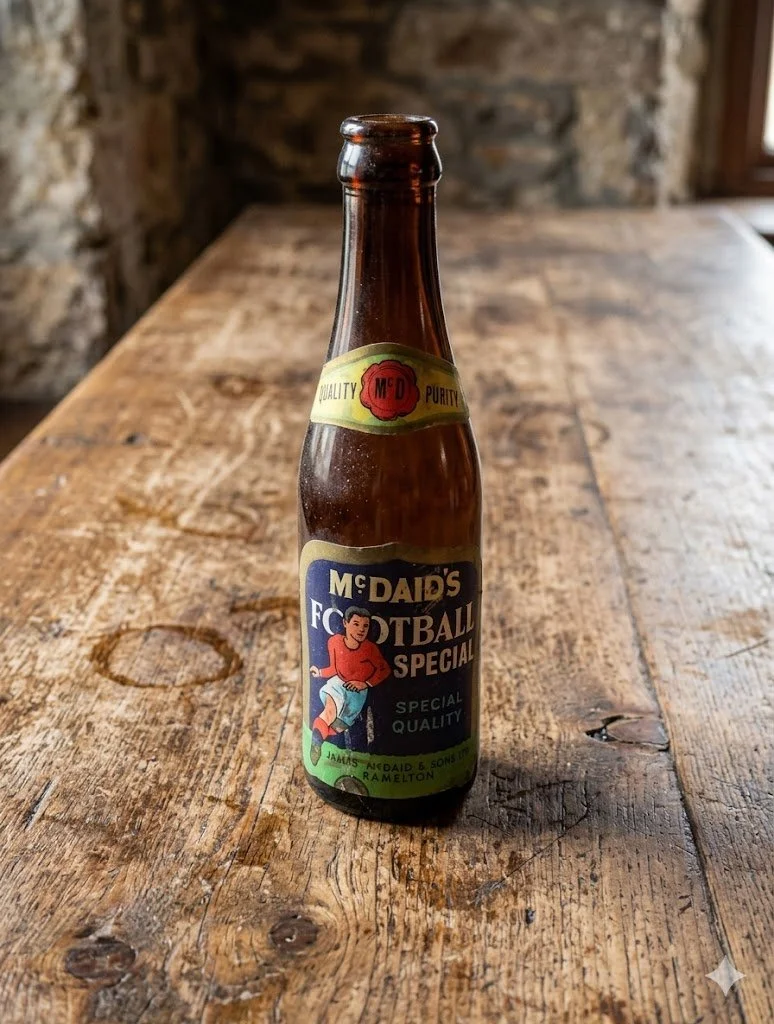
Football Special is one of Ireland’s most distinctive soft drinks, closely associated with Ramelton and Donegal, cheerfully emerging from a local bottling tradition, unlike the Big Fizzies we all know. It originated from the McDaid family’s bottling operation in Ramelton in mid-20th century, with production firmly established by the late 1940s (after WWII there was a worldwide surge in the popularity of soft drinks, as sugar supplies finally improved and refrigeration spread, and people just wanted to celebrate after years of austerity).
The name Football Special comes from its association with local football celebrations. According to tradition, the drink was created to mark victories by local sports teams, in particular Swilly Rovers, allowing players and supporters to “fill the cup” with something festive at a time when alcohol was frowned upon or too expensive. Early on, it was known colloquially as Football Cup, before settling into the name we know it by.
It's an older, Irish style of soft drink: a dark, sweet, lightly carbonated non-specifically fruity (even the label describes it as “mixed flavour”) cordial, which places it firmly in the tradition of temperance drinks, popular in Ireland from the late 19th century onward as alternatives to alcohol. They were sold as wholesome treats at dances, matches, and local celebrations.
Production eventually moved away from Ramelton, though the drink continues to be made under licence.
