
The Cost Of Stupidity
Since at least the last big financial crash I’ve been grumbling to myself about how already-absurdly-wealthy people (and Ireland had its own at the time) are so willing to break laws, best practice, and ordinary people just to gain (I nearly said “earn” there…) even more money that whole generations of their families would be unable to spend.
It’s disgusting enough on its own. But I’ve also long suspected that the super-rich have so much money, and are so removed from any kind of actual need, that when they do spend money they spend it on the most pointless, most stupid, most trivial things. You know, the things that people with taste and limits would rightly throw their heads back and laugh at. Which is basically what they’re doing to us.
What put this is my mind? That’s right: the news about Nicola Sturgeon’s former husband Peter Murrell, once chief executive of the Scottish National Party, a party nominally committed to social justice and the wellbeing of ordinary people. It’s outrageous enough that he embezzled £400,000 of party funds. But just look at the spree he went on: besides two cars and a motor home and designer manicure sets, he spent £3,232 on a coffee machine and £2,600 on some salt and pepper grinders. Two small cylinders to dispense some condiments. Really, really, exceptionally good and handsome grinders are available for about £40. But I suppose, when you're spending other people's money and you have the self-awareness of a dog at a buffet, spending is no fun unless it’s stupid. Still, he did also fork out for a book of his wife’s old speeches. Bless.
And Murrell is relatively small-time. He’s not helping bankrupt countries or sending cans of ladies into space, briefly. And it’s not just Bezos or Musk who specialise in having too few things to spend too much money on. Somewhere out there, for example, an unidentified billionaire is sleeping on a bed that hovers 1.3 feet above the floor using a system of industrial-grade magnets. Literally. I mean, he just had to have it. It took architect Janjaap Ruijssenaars seven years to develop. You can buy one for about $1.5 million. Or if that seems excessive, an additional 1:5 scale model that was used in an exhibition costs $146,000; life-changing money for a miniature copy of something already epically pointless.
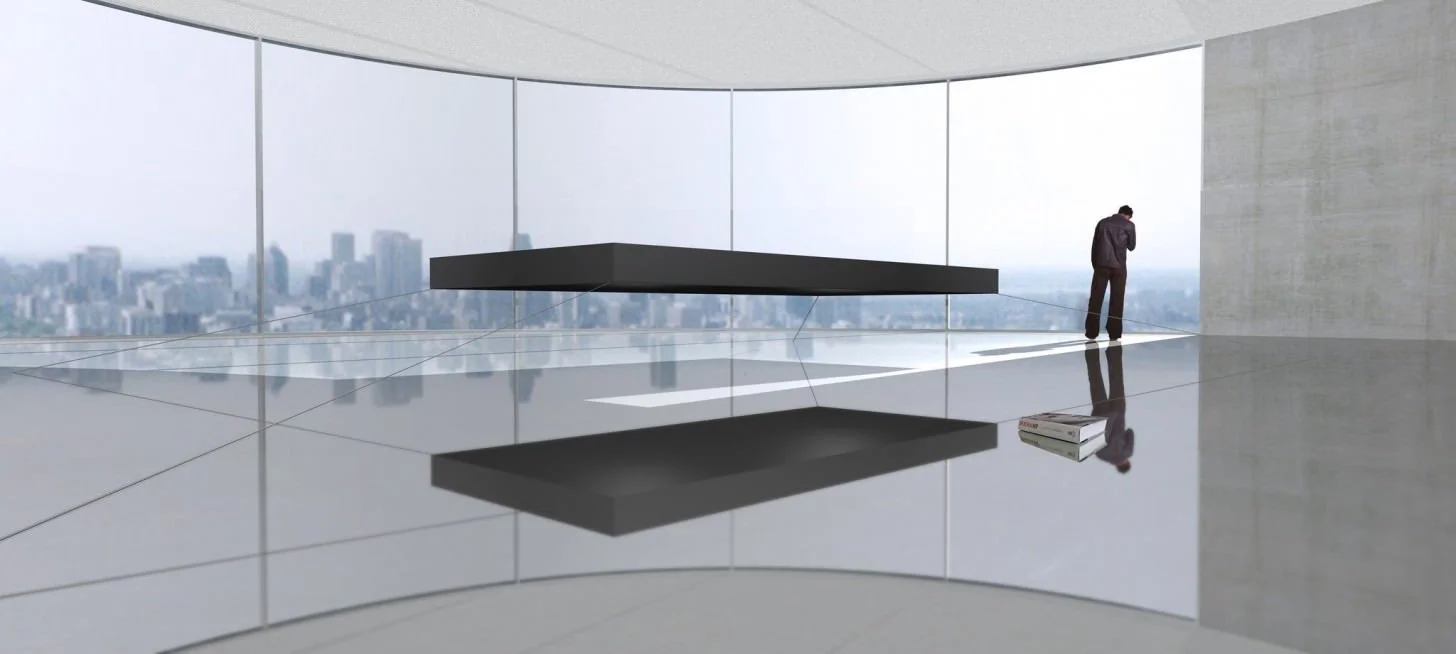
That useful bed, in the warm home of the super-rich
Slightly better known is Paris Hilton. She spent over $325,000 on a two-storey miniature mansion (actually a replica of her home) for her pets. It has air conditioning, heating, designer furniture, a balcony, and a crystal chandelier. Because of course that’s where dogs – who can barely see the chandelier, and who prefer somewhat different scents to humans – are at their happiest. But then, why would I make that point – the whole thing is clearly not about the dogs’ welfare, after all.
In 2009, an anonymous Australian businessman commissioned luxury designer (a sick-making job description if ever there was one) Stuart Hughes to create the "iPhone 3GS Supreme." So Hughes covered the phone in 271 grams of solid 22-karat gold and stuck 136 diamonds on the front, with the rear Apple logo also made from 53 diamonds. The home button was replaced with one rare 7.1-carat diamond. It cost $2.7 million. It was obsolete a few software updates later.
In 2013, an Indian businessman called Datta Phuge hired fifteen goldsmiths to make a shirt of solid gold thread, with a velvet lining and Swarovski crystal buttons. It weighed 7.7 pounds and was apparently uncomfortable to wear. It couldn’t be washed either, and it meant Phuge had to travel everywhere with a team of security guards. But hey, it turned heads and it sent a message, and helped him get rid of some of that pesky excess money.
All that considered, I have relatively more sympathy with the people who buy dinosaur skulls because at least they’re interesting. Like the unnamed American collector who spent $7.7 million (plus taxes and fees) at a Paris auction for "Big John," the largest Triceratops skeleton ever discovered. Big John is extraordinary, of course, but now he lives in a super-rich living room like just another crystal lamp when he should be in a museum somewhere – for all of us. (I should probably mention Nicolas Cage here: in 2007 he bought a Tarbosaurus skull for $276,000, only to subsequently discover it had been illegally smuggled out of Mongolia. He had to return it to the Mongolian government. He got nothing from it. Shame.)
You could go on, almost infinitely, with examples of this kind of wasteful stupidity: the people who think their pointless spending is actually a tally on some kind of status scoreboard only the super-rich can see or care about; or who take interesting things just to make furniture out of them (ooh, their dinner-party friends will pout over it…once); or who see properties only as profitable commodities rather than places where real people must live their real lives. When it’s particularly stupid or vulgar it can be funny, of course, but it doesn’t exist in a vacuum. When so much wealth concentrates at the tasteless top, it doesn't just produce eccentric spending: it warps markets, it closes places and lives off to the real people whose real-world wages simply cannot gain access. It turns the world into a disgusting playground for the crass and the greedy, and the rest of us can only enter it to maintain it for them.
And behind it all, even beyond the consciousness of the plastic halfwits who own it, all that money is just mouldering away, out of circulation. It’s not being invested in anything productive, not creating meaningful employment or solving problems. Money needs to move for everyone’s benefit. There is an old saying in Ireland that rent is “dead money” – but the real dead money is this vast ocean of it, locked away from almost everyone, serving nothing but ego, buying nothing but tat.
With this level of inequality it’s starting to look a civilisation that has forgotten what money is actually for; it’s certainly forgetting what value is. It’s grinding society, and ordinary people, and any kind of hope for the future, into far smaller pieces than anything Peter Murrell's pepper mills can do.
