
On Wellness
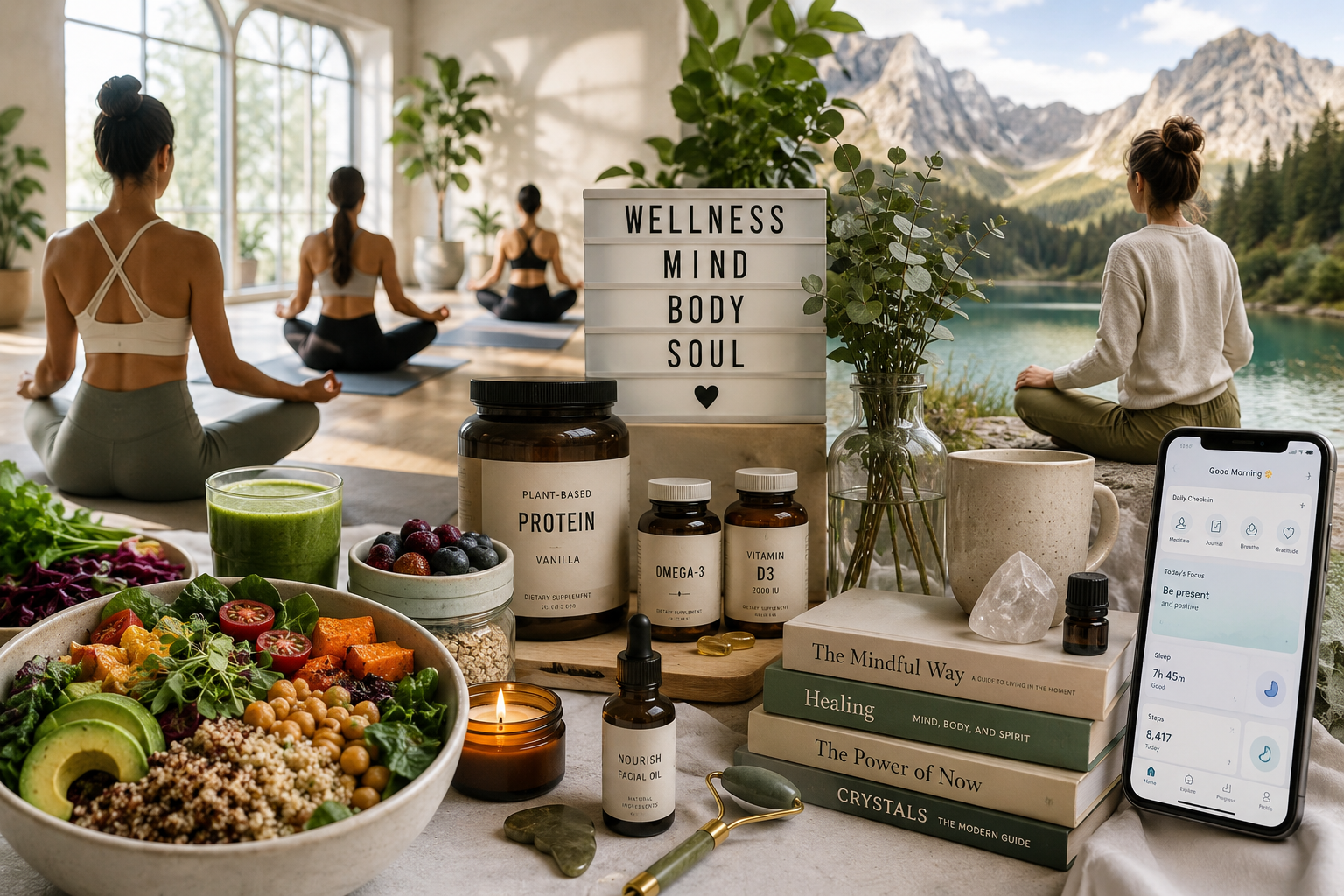
There it is again, that word, “wellness”. It’s on moisturisers, supplements, spa retreats, gut-health powders, mindfulness apps, and detox teas; it’s used to sell raw water, jade eggs, and vitamin drips. It’s on everything from the €5 juice to that €4,000 weekend. Isn’t it a wee bit weird that nobody asks what it means (if anything)? Or why we say “wellness” instead of “health”?
But vagueness is the whole point with wellness now. It started well, though. It began in a Unitarian church in Virginia in the late 1950s, when Halbert Dunn, a physician and biostatistician who had been Chief of the National Office of Vital Statistics for twenty-five years, gave 29 lectures introducing what he called "high-level wellness." His 1961 book of the same name defined wellness as "a condition…in which the individual moves forward, climbing toward a higher potential of functioning." This was a genuine argument for holistic thinking, and overlapped with the World Health Organization's 1948 definition of health as a state of physical, mental, and social wellbeing; in other words, it was not merely the absence of illness, an important new idea to be pushing.
Dunn's work received little attention until the 1970s when it was taken up by figures like Dr John Travis and Don Ardell, who created new assessment tools, developed the world's first university campus wellness centre, and established the National Wellness Institute (in America). These were also quite well-intentioned, but from here something very different grew.
The real problems began in the 1980s, when commercial industries — spas, supplement companies, lifestyle brands, alternative therapy providers — recognised that "wellness" was a most useful word: something that sounded scientific without actually having to be. In most jurisdictions, including the United States and EU, there are strict rules governing what you can claim about a product's effect on health. You cannot state that a product treats, cures, or prevents a disease without clinical evidence. Products making such claims can be classified as medicines and will be regulated accordingly. But vague claims are different. Under US law, for example (see further down for some information on the EU approach) a supplement maker can make claims about how a product affects the body's normal functioning without pre-market approval or significant scientific evidence. So "lowers blood pressure" requires clinical proof, but "Supports cardiovascular wellness" does not. "Treats anxiety" is a medical claim, but “Promotes calm and balance" is a lifestyle statement. It’s linguistic trickery.
This situation was formalised in America by the Dietary Supplement Health and Education Act of 1994 (DSHEA), legislation the supplement industry had lobbied hard for after years of fighting the Food & Drugs Administration. Through the 1980s, the FDA had been trying to clamp down on supplement companies making health claims, including arguing that single-ingredient supplements in capsules were "food additives" requiring approval. But it kept losing in court. Eventually, the industry went to Congress and won: the DSHEA shifted the burden of proof onto the FDA to demonstrate a product was unsafe, and exempted supplements already on the market from further testing. The number of supplements on the market grew more than sevenfold in the decade afterwards.
A 1999 court case, Pearson v. Shalala, pushed things further. Supplement advocates challenged the FDA's practice of banning insufficiently-proven health claims. The court ruled that the FDA's outright ban was inappropriate, and that adding a disclaimer would serve just as well. This allowed manufacturers to claim, for instance, that green tea may reduce cancer risk, as long as they add a disclaimer noting the scientific evidence is limited. Those disclaimers tend to appear in very small print – but they’re there.
The situation in the EU is different, but still legislatively weak. The EU looks (and in some ways is) tougher than the US, because every health claim must be scientifically evaluated and approved by the European Food Safety Authority (EFSA) before it can appear on a label (manufacturers in America can notify the regulator after the fact). EFSA has rejected more than 70% of applications for insufficient evidence. For vitamins and minerals, a manufacturer cannot say a product "supports energy"; they need an approved and precise claim, like "iron contributes to normal energy-yielding metabolism."
But the system has a weakness right where the wellness industry is most active: herbal supplements. When the EFSA legislation came into force in 2006, manufacturers submitted 4,637 claims for evaluation. Almost every one of the first 500 claims studied failed – something which is quite telling on its own. But the result was so bad, and there were so many products to be examined, that the EU faltered: rather than start banning them all, it placed botanical claims (echinacea, ashwagandha, valerian, St John's Wort, and hundreds of others) "on hold." They’re still there, neither approved nor rejected, yet still legally usable on products. It’s a dereliction of duty that means that, for the bulk of the herbal supplement market, EU consumers are far less protected than the existence of EFSA might lead them to believe.
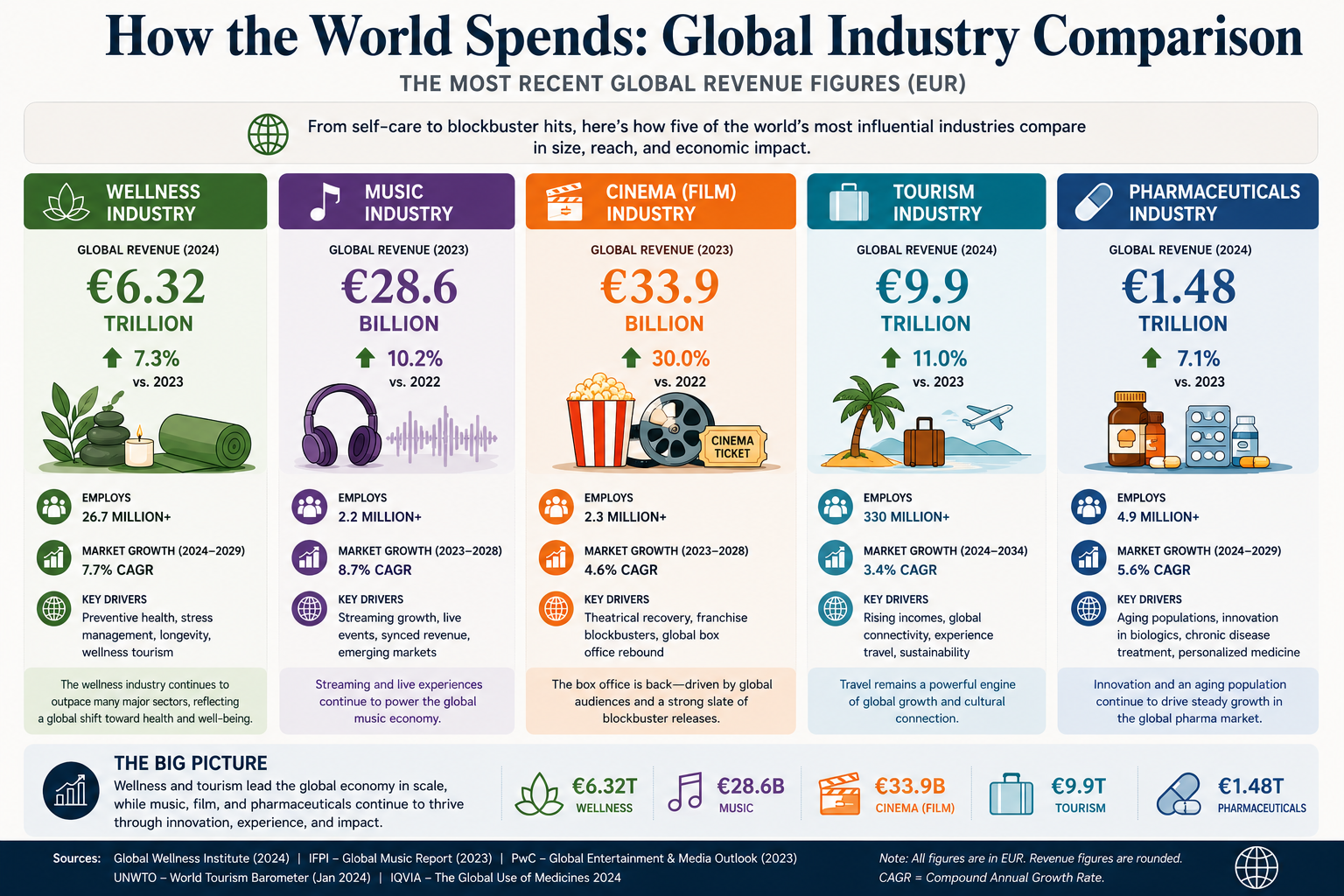
This all led to what might be the most explosive commercial growth of my lifetime. The global wellness market (supplements,detox programmes, "clean" beauty, fitness coaching, wellness tourism, alternative therapies…) reached $6.8 trillion in 2024. That’s far more than other global mega-industries like sports, the green economy, or IT.
It’s also almost four times bigger than “Big Pharma”, who have to prove their claims. Wellness not only doesn’t need to bother with that time or cost, but can just make implications without needing proof. Check the shops, or chemists, or Amazon: you’ll see numerous products that don’t claim benefits for defined conditions like "dementia" but freely promote benefits for "memory," "cognitive functioning," and "brain fog."
As with many other things, social media poured fuel on the fire. Wellness influencers now reach millions of followers, and can make millions of dollars, promoting whatever the latest diets/hormone-balancing protocols/gut health/supplement combos are. Again, they don’t make health claims but “wellness” claims. And they’re not experts either; they’re just chatty and have clear skin, and perhaps a story of difficult past lives. As journalist Jessica Knoll has put it, it’s "the industry that sells you things you don't need by making you feel like you're not enough."
And it does impact people. We delay or avoid evidence-based treatment in favour of wellness products. We spend money on products with little or no proven benefit. And we subtly understand that if our health is still not perfect, it is because we’ve not tried hard enough or bought the right things.
It’s not hard to show how meaningless “wellness” has become. Consider the jam sandwich (or, actually, almost anything you can eat, attend, or do). It contains carbohydrates, some micronutrients, and potentially fibre. It is technically defensible to claim it "supports wellness." So does coffee ("enhances focus") and chocolate ("boosts mood"). None of these statements are false; but they selectively highlight one effect while ignoring context, impact, and any trade-offs. "Supports wellness" cannot be proven or disproven. If you eat it and feel fine, the claim is valid. If you don't feel fine, that is presumably something else. “Wellness” is immunised against wrongness.
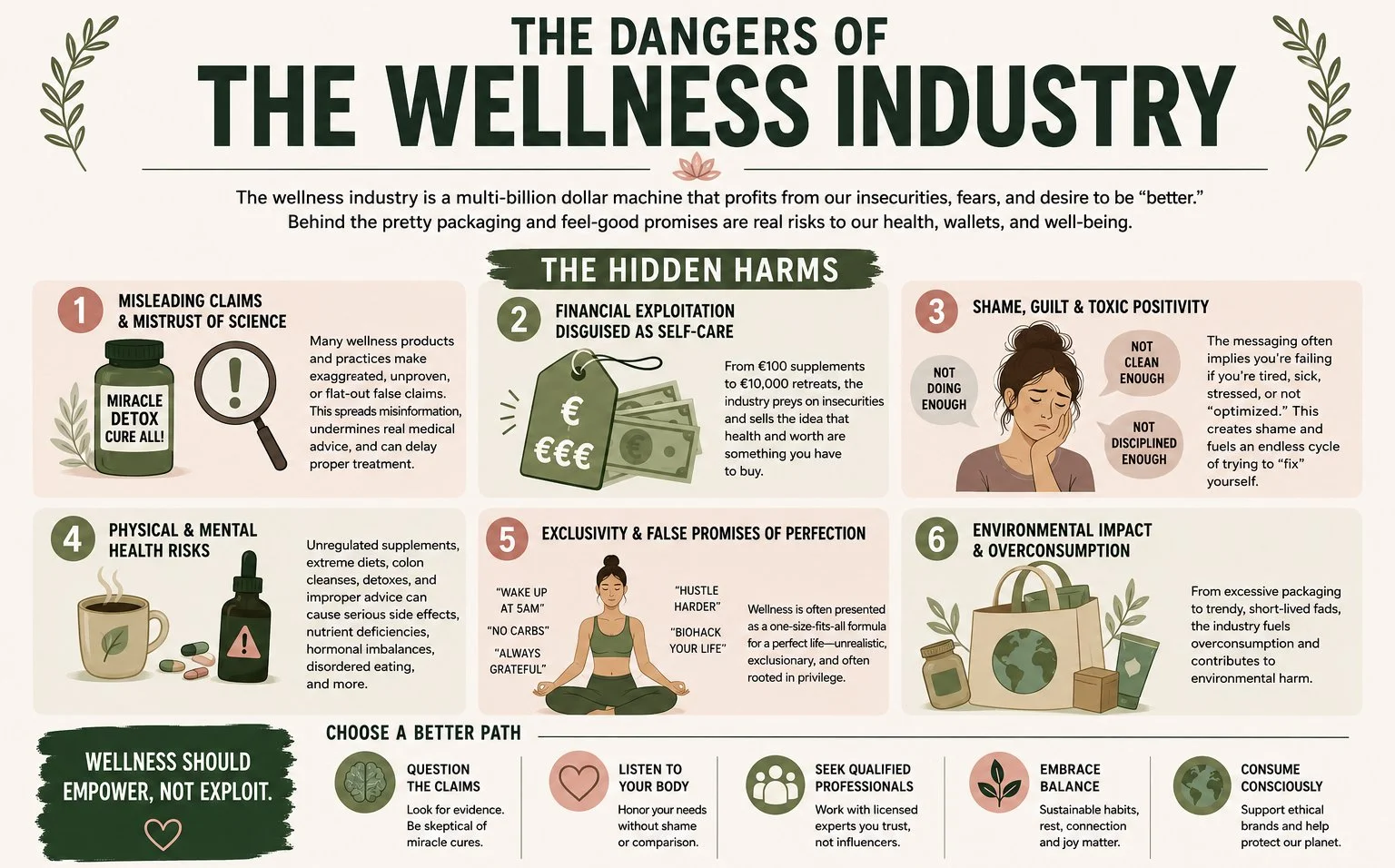
We must be fair. Not everything sold for wellness is nonsense. Exercise, sleep, stress reduction, and balanced nutrition are also well-supported by evidence, and many people have improved their lives through them. The problem is not the activities themselves but that "wellness" banner that has confused us and muddied the waters between vague claims (“it feels good”) and evidence (“it actually works).”
Halbert Dunn believed in "wellness" as a way to improve the lot of humans everywhere, not just in bare health terms. It’s not his fault, but it has become a commercial monster: expensive, slick, hard for most pressurised shoppers to see through. A rule of thumb when buying? The more a product is sold on "wellness", the more we should try to see what specific effect is being claimed, and what studies support that. If all we get is "it supports your overall wellbeing" we’re not looking at science, just at marketing.
