My Top Tens: Films
All right. I know we already have too many of these lists, but then again another one could hardly hurt, could it?
Let’s start with my favourite films…or, you know, movies. Of course, before beginning it’s only fair to say that I’m not necessarily saying these are the very best films, but they’re the ones that give me the most repeatable pleasure when I watch them. And I can’t even say this is an absolutely definitive list; on a different day I might produce something slightly different. But only slightly: on any day these would all be in the Top 15 arguing for a place in the Top 10.
Here we go then, in no particular order…
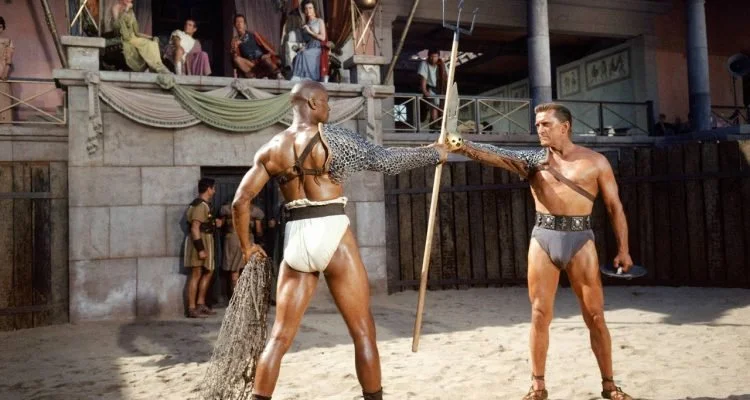
Spartacus (1960)
When I was a child this seemed to be on the TV every Christmas; you know what, it might even have been the very thing that got me interested in ancient Rome. Directed by Stanley Kubrick and written by Dalton Trumbo (whose name did not initially appear in the credits as he had been blacklisted by Hollywood for refusing to testify before the House Un-American Activities Committee), Spartacus has the huge scale (to this day the battle scenes are impressive) and visceral combat scenes we’ve come to expect of a Roman spectacle, but it has a soul missing from most of its relatives: all those somewhat subversive themes of labour, dignity, loyalty and resistance against tyranny (if such things are still relevant…). Kirk Douglas is both dimpledly (I looked it up) rugged and empathetic as the slave-turned-general, but the film thrives on its unusual intellectual weight. Most famously there’s the "I am Spartacus" scene, which remains one of the top ten ways to make a grown man blubber. It’s a bit like the more sophisticated uncle of Gladiator: yes, the sweaty youngster has his appeal, but isn’t the older film’s chiselled philosophising still intriguing?
Dialogue:
Spartacus: "I am no traitor. I am no coward. I stand for freedom."
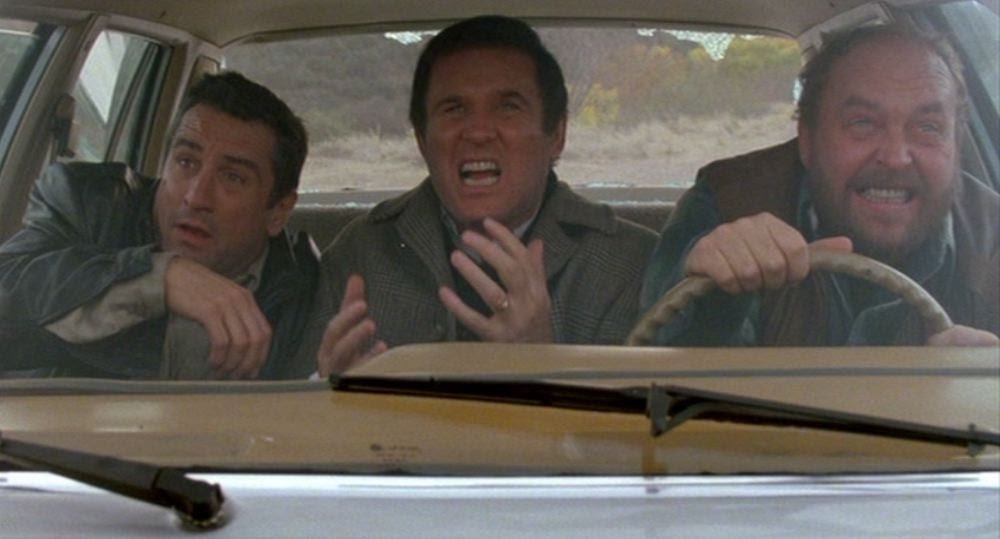
Midnight Run (1988)
Weirdly, this seems to have been slightly forgotten in recent years despite being the gold standard for the action-comedy genre. That’s largely because it refuses to sacrifice the character for the comedy. The chemistry between Robert De Niro’s cynical bounty hunter and Charles Grodin’s neurotically dry accountant is lightning in a bottle, starting as a standard grouchy odd couple and evolving into a genuine, begrudging friendship (partly built, like any decent friendship, on shared disappointment and integrity). With a sharp script by George Gallo and a relentless pace, it manages to be hilarious, thrilling, and in one or two scenes surprisingly poignant without ever turning sentimental. It’s lighter than some others on this list, but dammit, it’s nearly perfect: a hill I’ll happily die on.
Dialogue
You could make a case for half the script, but “See ya in the next life” is one of the most well-earned moments of warm emotion in cinema.
The Holdovers (2023)
Yes, it’s very recent – the youngest film on this list – but The Holdovers feels like a lost classic from the 1970s, trading flash and zip for real human connection. Alexander Payne’s story is equal parts sarcasm and sadness, anchored by Paul Giamatti as the curmudgeonly but pained Paul Hunham. By trapping three lonely souls together during a snowy Christmas break, the film explores how shared trauma and unexpected kindness can bridge the widest gaps. It avoids easy clichés, even with an ending that could have been played for cheaper tears or unconvincing defiance, opting instead for a bittersweet honesty that lingers long after the credits roll. It is a soulful reminder of why we need each other, which surely makes this the Christmas classic we should all be watching.
Dialogue
Angus: "I thought you didn't have a family."
Hunham: "I don't. I have the ancient world. It’s much more predictable."
Unforgiven (1992)
Clint Eastwood’s sombre hombre masterpiece effectively gave the lie to the traditional Western by stripping away its glamour. By portraying William Munny (a part he held the rights to until he was old enough to play it) as a physically ageing, morally haunted man rather than a standard legendary hero, the film forces the audience to confront the ugly, unromantic reality of violence. It’s a film about the extremes that lie in even the most ordinary person (and vice versa), the weight of reputation, and the fact that "killing a man is a hell of a thing." And apart from the plot, the characters, and the beauty of the film itself, was there ever a better foursome at the heart of any film: Eastwood, Morgan Freeman, Richard Harris, and Gene Hackman are all distinct and memorable here, none all good or all bad, but pitted against one another by harsh circumstance.
Dialogue
Little Bill: "I don't deserve this... to die like this. I was building a house."
Munny: "Deserve's got nothin' to do with it."
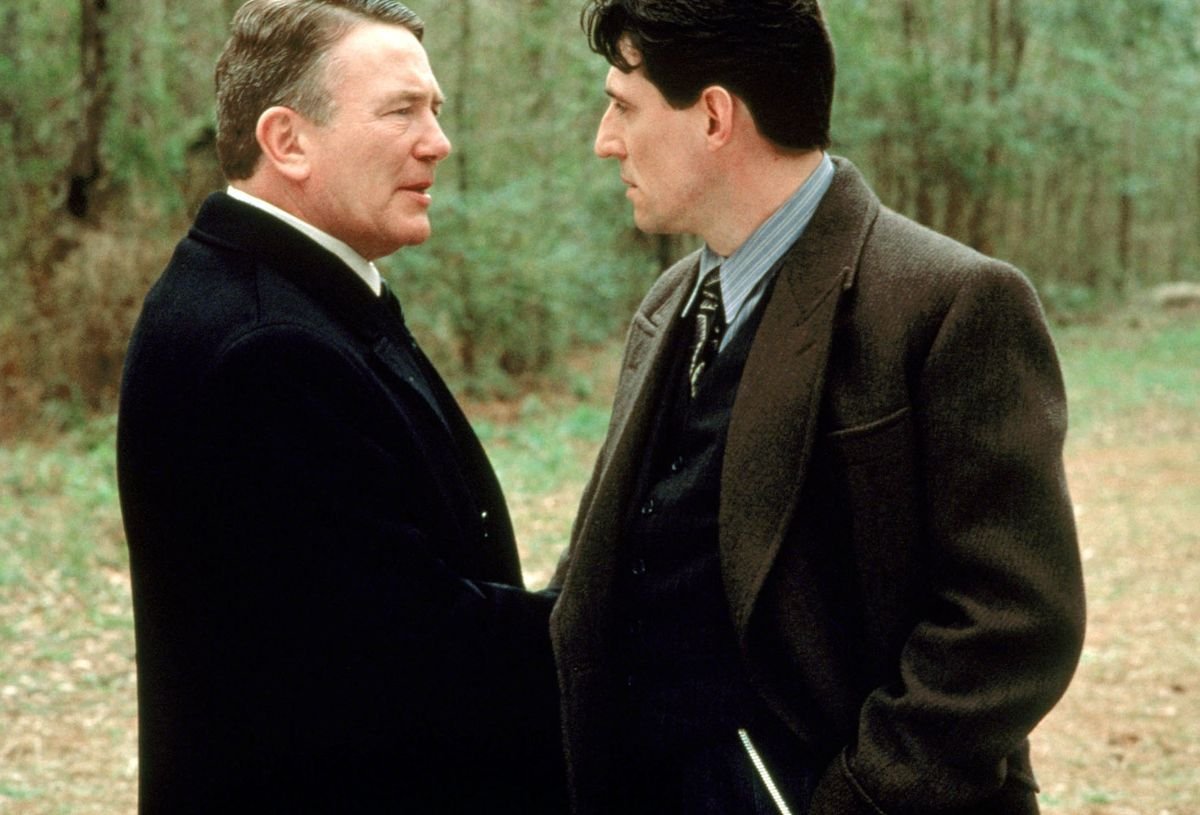
Miller’s Crossing (1990)
Another film that seems to have faded form memory a little, despite its sepia, men-in-hats gangster look and the presence of (among others) Albert Finney, Gabriel Byrne, and Jon Turturro. Maybe it’s just because the Coen Brothers went on to make so many other memorable films that created more buzz. But I’m not sure they ever topped this Prohibition-era noir that has its explosions of violence but prioritises the intellect over raw firepower. It is a handsome and lyrical exploration of loyalty and ethics in a criminal underworld. Gabriel Byrne’s Tom Reagan is a man who wins not through strength or planning, but through accident, manipulation and the ability to take a punch. Between the gorgeous forest scenes, the machine-gun dialogue, and Jon Polito’s “you giving me the high-hat?” performance, it is a sophisticated puzzle and endlessly fun to watch.
Dialogue
Johnny Caspar: "I'm talkin' about friendship. I'm talkin' about character. I'm talkin' about—hell, Leo, I ain't embarrassed to use the word—I'm talkin' about ethics."
Raging Bull (1980)
Often cited as the greatest film of the 1980s, Raging Bull is an unflinching portrait of self-destruction, following the life of boxer Jake LaMotta (famously played by Robert De Niro). Martin Scorsese avoids the typical sports film beats and triumphs, choosing instead to use the boxing ring as a metaphor for Jake LaMotta’s paranoia and jealousy. De Niro’s transformative performance is legendary, capturing a man who communicates mainly through violence, while the stark black-and-white imagery innovative sound design make every punch feel terribly intimate. Less closely related to the likes of Rocky than to real studies of (clearly toxic) masculinity, it’s difficult to watch but impossible to look away from.
Dialogue
Jake: "Look at these hands. I got small hands. I got a little girl's hands. I'm never gonna get the title. I can't even hit hard enough to hurt a guy. I gotta hit him a thousand times to hurt him."
North by Northwest (1959)
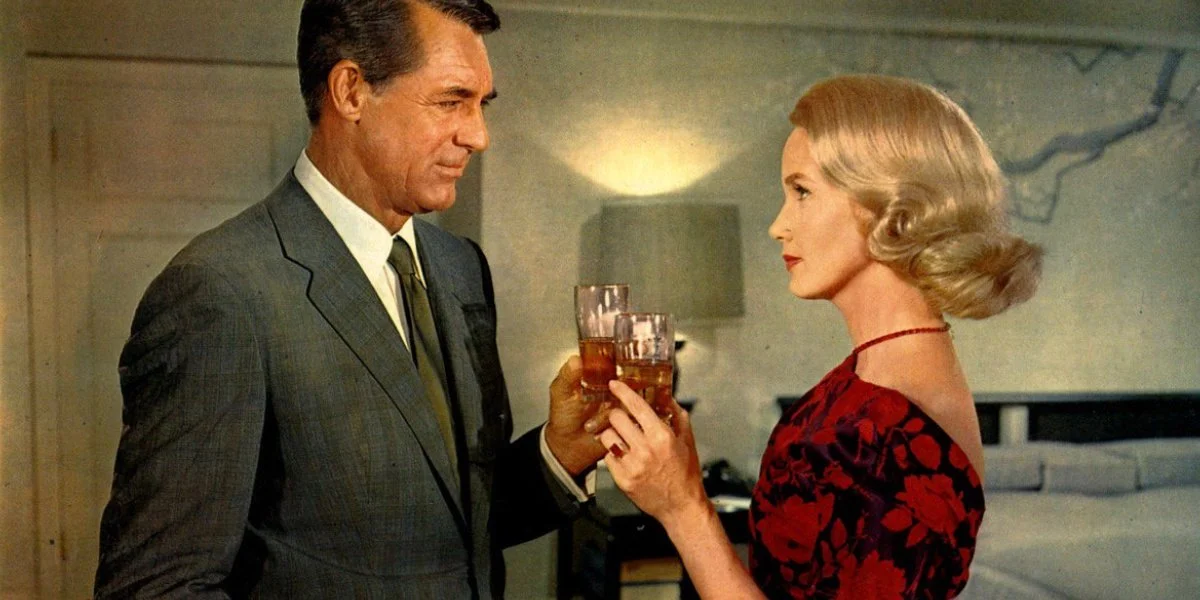
Alfred Hitchcock’s North by Northwest is the ultimate "wrong man" thriller and arguably the blueprint for the modern action blockbuster (you can see touches of it in films like The Fugitive and even the Bourne films). It captures Cary Grant at the height of his charisma as Roger Thornhill, an advertising executive swept into a world of spies and assassinations and confusion. It’s a masterclass in suspense, balancing tension, sophisticated wit, and glamour (both Grant and Eva Marie Saint). From the iconic crop-duster chase to the, well, iconic climax on Mount Rushmore, Hitchcock gives us a pacy, perfectly calibrated piece of pure, influential entertainment. And did anyone ever use a smaller shaving razor than Thornhill?
Dialogue
Roger’s Mother: "Roger, is this the woman who's trying to kill you?"
Roger: "Yes, Mother, isn't she something?"
Witness (1985)
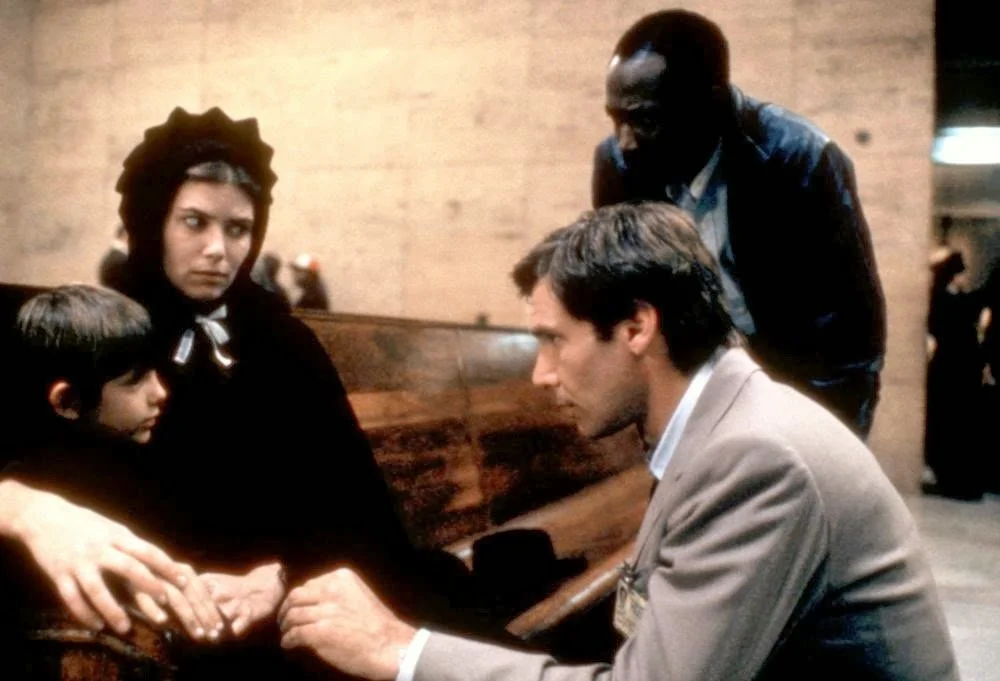
Witness is a rare hybrid that balances a tense police procedural with a contemplative fish-out-of-water drama. Peter Weir’s direction elevates the film beyond a standard solid thriller by juxtaposing the violent modern world of Philadelphia with the agrarian lifestyle of the Amish, where our hero John Book is temporarily ill and in hiding. As Book, Harrison Ford gives his most nuanced performance, a man discovering his own capacity for gentleness while unable to simply let his old violent world be. The famous barn-raising scene might not make it into a modern film, but it’s a gem of visual storytelling, illustrating community and connection without a single word of unnecessary dialogue. A beautiful, patient film about the friction between two worlds and a love that cannot quite bridge them.
Dialogue
Samuel: "Is it a good thing to kill a man?"
John Book: "No, Samuel. But sometimes you have to."
Samuel: "But if you have to, is it a good thing?"
John Book: "No. It's just... it's just what has to be done."
Casablanca (1942)
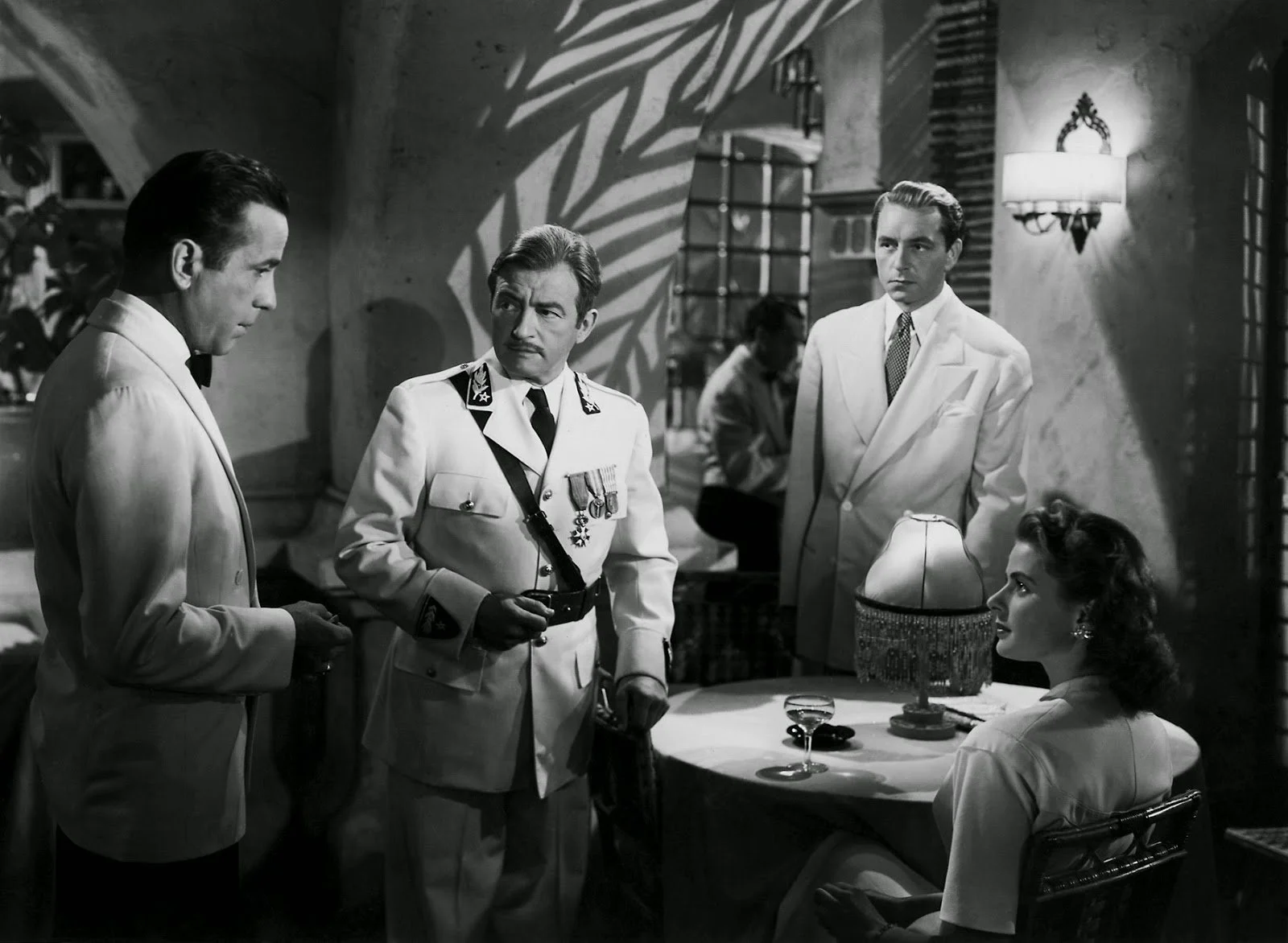
Casablanca is one of those productions where every element, from the iconic dialogue (it’s surely the most quotable, or at least quoted, film in history?) to the moody lighting and the photogenic stars, aligned perfectly into one of the most enduring romances in cinema. Humphrey Bogart’s Rick Blaine is the ultimate cynical hero, a man hiding a broken heart behind a mask of WTFP neutrality until the politics, and his own relationships, demand he take a side. It is a remarkably tight, and surprisingly eventful, political thriller disguised as a love story, balancing wit, wartime tension, and a profound sense of sacrifice. It’s also something of a miracle: still being written as it was filming, hampered by budget and set problems, and with a lot of hands on the wheel, it really shouldn’t have been that good (and actually some senior critics were a bit sniffy about it at the time; Pauline Kael called it “a movie that demonstrates how entertaining a bad movie can be”). But somehow it has rarely been equalled, although while the ultimate message is about doing the right thing despite the cost, it has largely escaped notice that Louis, the local police chief, is a corrupt sexual predator who would simply not be acceptable today.
Dialogue:
Ugarte: "You despise me, don't you?"
Rick: "If I gave you any thought, I probably would."
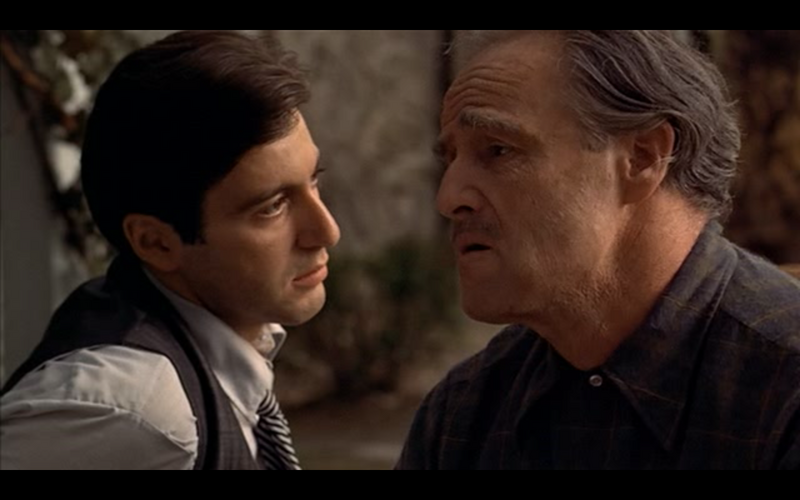
The Godfather (1972)
The Godfather, violent as it is, treats the mafia not as a street gang, but as a kind of corporate monarchy. Its greatness lies in the tragic transformation of Michael Corleone (Al Pacino), a softly-spoken young man who chooses to become the villain to save his family. Coppola’s use of shadow, combined with Nino Rota’s operatic score, creates a world of immense gravity, moving from the cheeriest family celebrations to blood and betrayal. Much of it looks like a Caravaggio painting, while the script trusts us enough not to simply tell us what is going on; and Marlon Brando not only gets his most memorable character, but wears some serious threads while showing us all how power destroys. Godfather II went on to expand the story with similar brilliance, but there’s a purity to the first film that make it, for me, that bit more memorable.
Dialogue
Peter Clemenza: "Leave the gun. Take the cannoli."