
A Brief History Of Marriage
How old is the institution of marriage?
The best current evidence suggests that formal marriage has been around for about 4,350 years. For thousands of years before that “families” were more like small tribes: loose groups of up to 30 people, with several male leaders sharing women and children. As huntergatherers slowly became farmers, early society stabilised; marriage was a part of that. The first officially recorded marriage (that we know of) united a man and a woman in about 2350 BCE in Mesopotamia. Over the next several centuries, marriage evolved into a widespread institution embraced by the ancient Hebrews, Greeks, and Romans - though back then it had little to do with either love or religion.
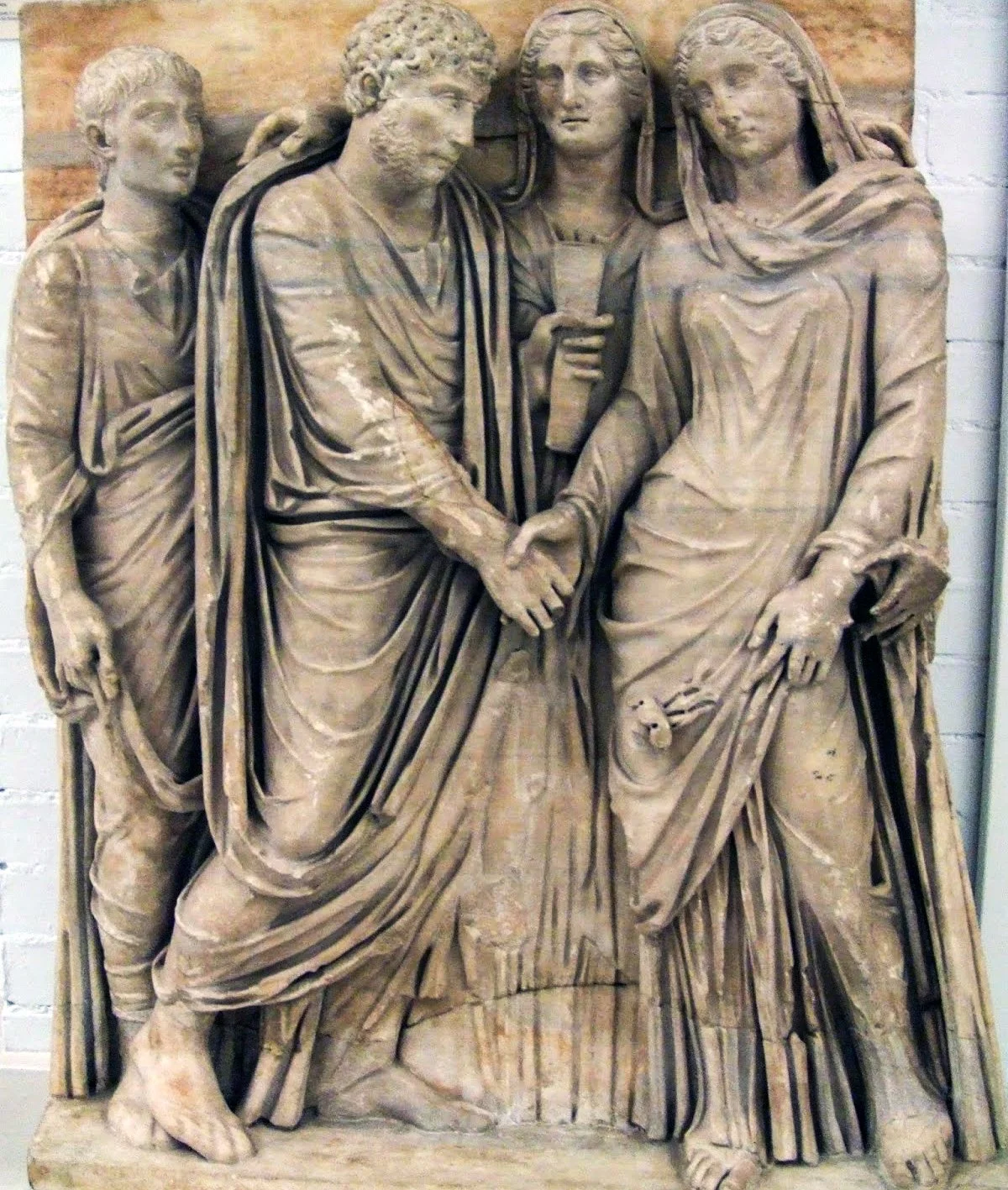
Relief of a Roman wedding, British Museum. It could be a long day posing before cameras were invented.
If not love or religion, what was it about?
Different societies had different ideas: it could be same-sex, multiple, companionable, economic, or political, depending on where you looked. The primary purpose generally, though, was to bind women to men and so guarantee that a man's children were truly his biological heirs. Through marriage, a woman became a man's property, often with her own rights and properties secondary to her husband’s (or even subsumed into his, in a principle called coverture). Ancient Hebrew men were free to take several wives, while married Greeks and Romans were free to have other sexual partners (and if wives failed to produce offspring, their husbands could give them back and marry someone else). Gradually, though, campaigns for equal rights for all have changed the shape of marriage in many countries. Article 16 of the Universal Declaration of Human Rights declares that “Men and women of full age, without any limitation due to race, nationality or religion, have the right to marry and to found a family. They are entitled to equal rights as to marriage, during marriage and at its dissolution. Marriage shall be entered into only with the free and full consent of the intending spouses.”
But wait, I really thought it was a religious thing?
No. It’s often seen so now (especially whenever there’s talk of changing something about it), but that’s a relatively recent development. Even the Catholic Church had little interest in it for 1,000 years; for centuries it was so convinced that the world was about to end it recommended that people stay celibate and prepare for the end. But when the first millennium came and went with no sign of the Apocalypse, it started to realise it might have made a mistake, and became more interested in earthly power.
Back then kings were, em, free with their affections, and one of the biggest problems the courts of Europe faced was deciding which child was the proper heir to the throne. A child through marriage would be the obvious choice, but inevitably other women with whom the king had been “friendly”would present slightly older children and claim the king was the father, so their son was the rightful heir.
The king alone could rarely be trusted to settle the debate. Who else could decide? Why, the Pope of course, an authority higher than a king - so the Church stepped into the fray, deciding which child was the “legitimate child” (which is where that evil phrase gained its power). Realising they could benefit from the royal families they favoured, the Popes then slowly moved into the family and marriage business, backing one wealthy family or another in exchange for support and promises that their children would be raised in the Catholic faith.
It wasn’t until the 8th century that some church officials began to consider marriage a sacrament - and it was only at the Council of Trent in 1563 that the sacramental nature of marriage was written into canon law.
How did that change marriage itself?
Slowly marriage came to be seen as a religious idea, and new ideas were attached to it. Church doctrine declared that the married pair were “of one flesh”, and forbade divorce and extra-marital partners. Men were taught to show greater respect for their wives, but women were taught that the men were still their masters, and that they should defer to them.
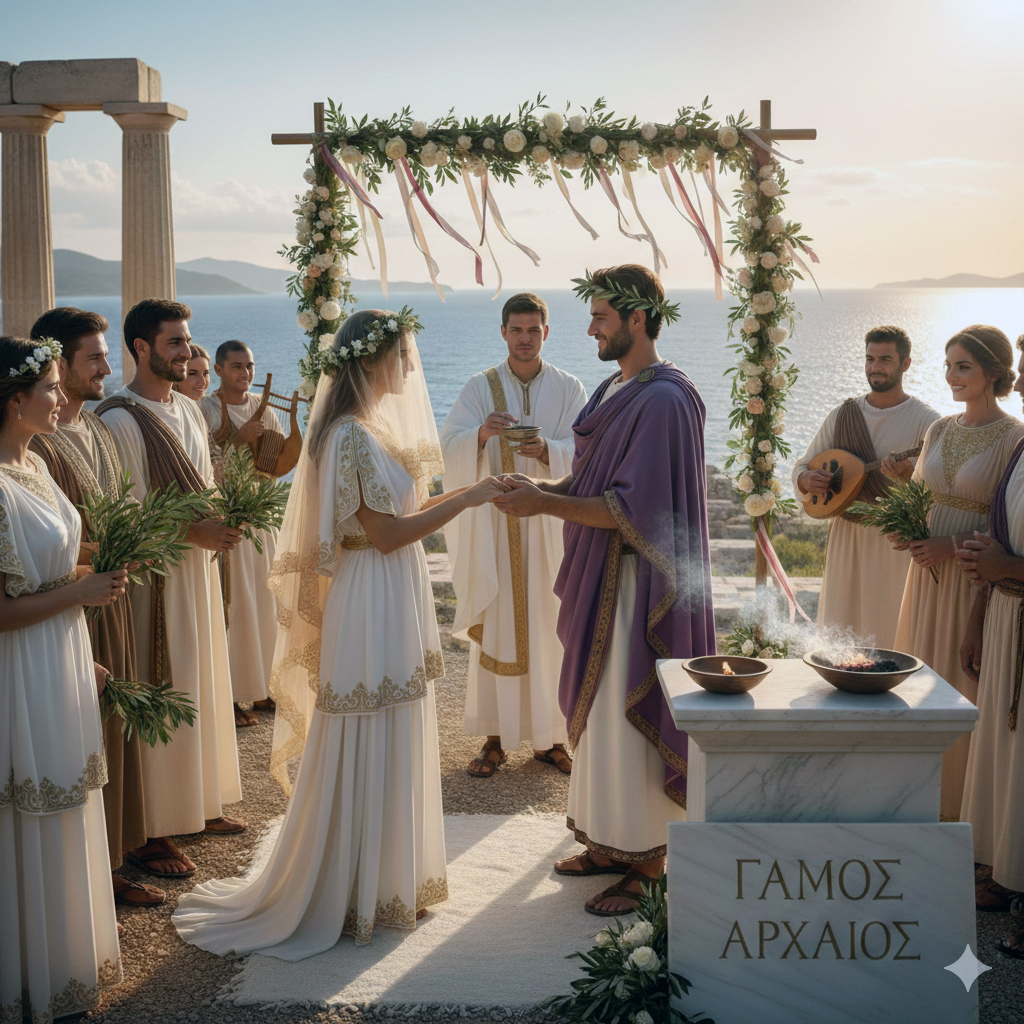
Greek wedding
Ah, but what about love?
For most of human history, marriage was a practical or political arrangement. The idea of romantic love only goes as far back as the Middle Ages, possibly invented by the French in their storytelling: the model was the knight who felt intense love for someone else's wife. Twelfth-century advice suggested men should woo their ladies by praising their eyes, hair, and lips, while women were advised to use flirtatious glances only (”anything but a frank and open entreaty”) on the men they liked. The history of meaningful looks that nobody knows the meaning of is a long one. Love changed marriage in its turn too. Marilyn Yalom, author of A History Of The Wife, credits the concept of romantic love with giving women greater leverage in what had previously been a largely pragmatic transaction. Wives no longer existed just to serve men; in fact, the romantic prince sought to serve the woman he loved. Still, the notion that the husband “owned” the wife took a long time to die (it’s still around in some places). The first colonists in America often not only accepted polygamy, but officially recognised the husband’s dominance (the “coverture” doctrine again). The bride gave up her name to symbolise the surrendering of her identity, while the husband suddenly became more important, as the official public representative of two people, not one (rules were so strict that any American woman who married a foreigner immediately lost her citizenship).
How did this tradition change?
It happened at different paces in different places, but generally, as women won the right to vote, marriage became recognised as a union of two full and separate citizens. Tradition still often dictated that the husband ruled the home, but social movements over the last few decades have meant that even that means very little now (or is sometimes observed in token fashion only). Gradually, things like birth control have changed the meaning of marriage so it’s less bound up with children these days; and by 1990 Ireland joined numerous other countries in declaring marital rape a crime.
“The idea that marriage is a private relationship for the fulfilment of two individuals is really very new,” says author and historian Stephanie Coontz. “Within the past 40 years, marriage has changed more than in the last 5,000.”
