
Where Did All The Protest Songs Go?
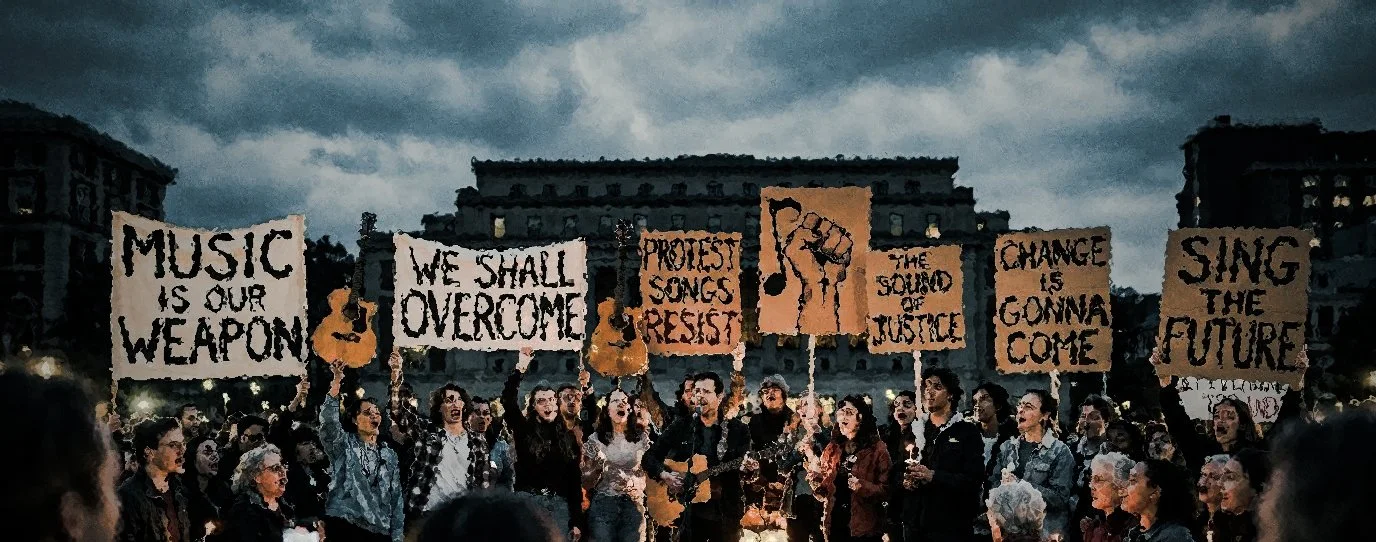
For those lacking power, music has perhaps always been the most available weapon. Even before the printing press, people put their problems into words and music: invisible and portable, easily transferred across borders (and generations), it is probably impossible to fully suppress.
The tradition itself stretches back, presumably, as long as people have had music and problems. English and Irish folk songs railed against conscription, oppression and famine; some old Irish protest songs, like Skibbereen and A Nation Once Again are still relatively familiar today, even if their original contexts are less so. In America, slaves sang spirituals often with coded messages of resistance, like Go Down, Moses (“and tell old Pharaoh to let my people go”), while the many labour movements of the 19th century produced anthems like The Internationale, which became the rallying cry for workers across the increasingly-industrialised world.
In the early 20th century radio new technologies began to reach more people, and people like Joe Hill used simple folk tunes to organise miners and workers (a catchy chorus could be more effective than a pamphlet, especially where literacy was patchy). The 1920s saw more songs protesting against racism, perhaps most notably the haunting anti-lynching song Strange Fruit (written by Lewis Allan and performed most famously by Billie Holiday), which has been described as the first great protest song. Blues music also began to be heard more widely around this time, songs often highlighting the discrimination the singers faced, and their struggles just to find and keep a job.
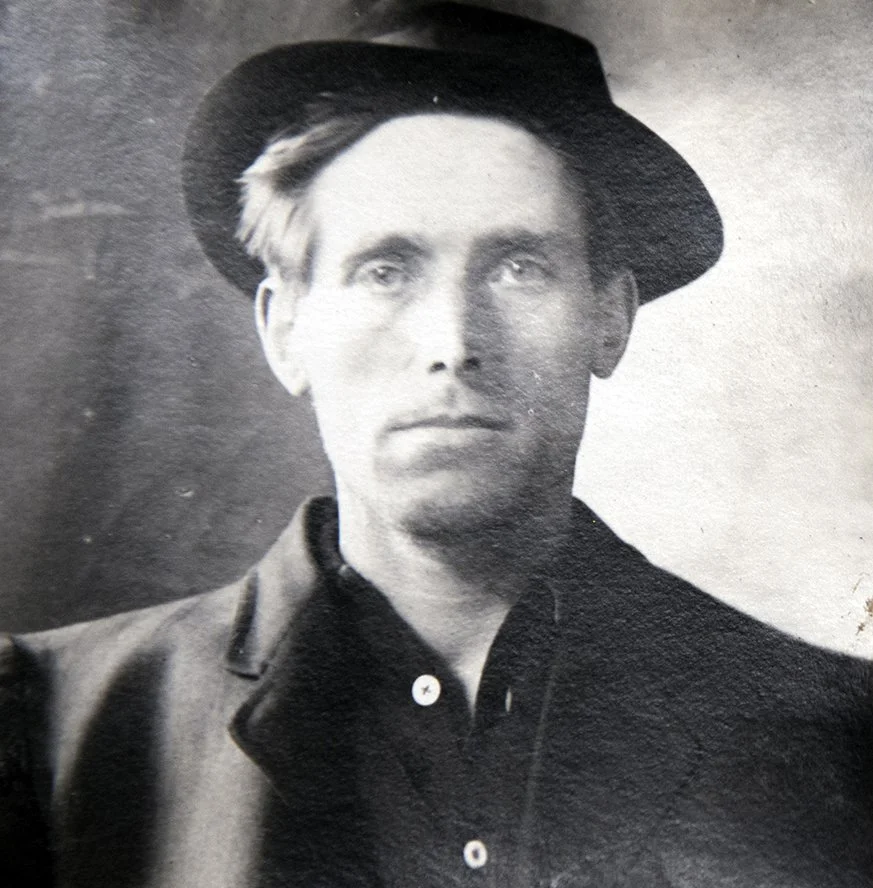
Joe Hill, Swedish-American labor activist and songwriter. Originally an immigrant worker struggling for employment, his songs include "The Preacher and the Slave", and “There Is Power in a Union".
By the 1930s, Woody Guthrie — whose guitar was famously labelled "This Machine Kills Fascists" — took things to a new level, writing against poverty, corporate greed, and cruelty. Even the song which is arguably his most famous, and which is now misread as a bit of generous patriotism, This Land Is Your Land, was a sarcastic rebuke to Irving Berlin's God Bless America. Guthrie was also friend and mentor to Pete Seeger, who carried the tradition through the McCarthy era, refusing to name names before the House Un-American Activities Committee, using music as a form of defiance.
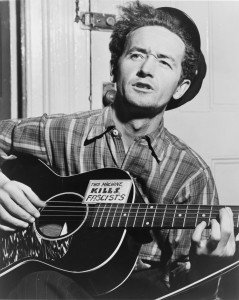
Woody Guthrie
But it was the 1960s that really crystallised the protest song as a genre in its own right in people’s minds. A young Bob Dylan variously asked questions and scolded with songs like Blowin' In The Wind and Masters Of War, while the civil rights movement in America produced enduring songs like We Shall Overcome (adapted from a gospel hymn, and later cited by President Lyndon Johnson in his speech urging Congress to pass the Voting Rights Act) and Sam Cooke's A Change Is Gonna Come, written after he was turned away from a whites-only motel.
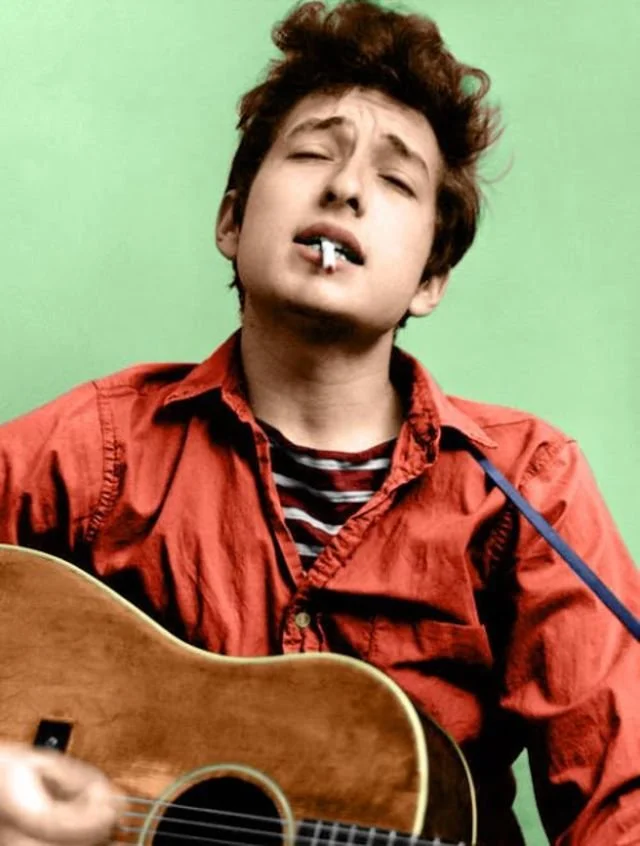
Bob Dylan
These songs were strong enough, and widely-enough heard, to actually shift legislation and public opinion. A few years later, Edwin Starr's War and Neil Young's Ohio (written days after the Kent State massacre) hardened anti-Vietnam War sentiment at critical moments. The protest song was not just reflecting public feeling but actively shaping it.
And then…well, it’s hard these days, when you think of “protest songs” not to think of sincere young men with guitars in the 1960s. Something happened along the way that caused it to fade, and for some of its strongest proponents to question it. That even included Dylan himself, who largely retired his protest songs and even wrote My Back Pages about them suggesting they were “lies that life was black and white.”
But the genre, although it drifted and changed shape, did not quite disappear; at least not immediately. Punk, from the 1970s, raged about unemployment and Thatcherism; in the early 1980s U2 were still angry and credible enough to put out the anti-violence Sunday Bloody Sunday; and in the late 1980s Hip-hop, through songs like Public Enemy's Fight The Power, became the most politically angry music.
But by the 1990s, the times, ahem, they were a-changing and the world becoming increasingly corporate. The media fragmented into a thousand channels and outlets that no longer commanded unified audiences: these days a song can be a hit in one community and completely unheard of in another. Then corporations (and if we’re talking about “real” enemies in need of a protest song…) learned to brand dissent itself, selling rebellious slogans on T-shirts that not only made them some extra money but diluted the power of protest. In this environment the industry, now mainly a handful of major labels, preferred artists who were easy rather than confrontational. When the Dixie Chicks criticised George W. Bush in 2003, their career was effectively destroyed overnight; a commercial warning to anyone watching. And as we moved into the 21st century, something called Digital Slacktivism began to emerge on social media: why bother writing a song when you can just post a hashtag or a frowny emoji?
The result was a shortage of protest songs for anyone keeping an ear out for them. And when they did come, they often came from older acts with memories of the golden age: Bruce Springsteen’s Wrecking Ball was an angry screed about the financial crisis around 2010, and was some of his best work for years, but you had to wonder why this kind of thing was being left to a man in his mid-60s. When, at a book launch around this time I asked the author Stuart Maconie this very question, he too looked a little disheartened about it and suggested there were just too many other things occupying the minds of younger people these days.
Still, the protest song never quite died: at the very least, it was always there as a theoretical option (and Josh Ritter, for one, made active use of it in complex songs like the anti-war Father’s War or Torch Committee, about the banality of evil and state control). And by 2026, with climate problems, war, social unrest, employment fears, and overwhelming corruption, the conditions that have historically produced protest music had converged in terrifying new ways. And in some ways, it’s the very technologies that helped kill it off that now make it possible with even more immediacy than it once had. When ICE shot Alex Pretti on January 25, Bruce Springsteen (yes, him again) wrote and released Streets Of Minneapolis by January 28 (it’s not subtle, but when he confided to Tom Morello that it might be too blunt, Morello replied: "Nuance is wonderful, but sometimes you have to kick them in the teeth.") On the same day Billy Bragg, a long-time protester, released City Of Heroes, and the Dropkick Murphys put out Citizen I.C.E., while Lucinda Williams released World’s Gone Wrong.
Those are the established acts. Other new acts have emerged. Bad Bunny used his Super Bowl halftime show (with an audience of 128 million people) to spotlight the denigration of Puerto Rico and call for unity in the face of modern oppression. Jesse Welles not only writes songs like Join ICE and, 9 months ago, Sometimes You Bomb Iran (often singing them in a field with a guitar, for online videos), but clearly writes them in the style of those 1960s Dylan songs. And in one interesting tweak, on February 1st we got a new song called It’s Okay To Change Your Mind, written by Annie Schlaefer and sung, not by an organised act of any kind, but by 2,000 people gathered outside a Minneapolis hotel. Going beyond even the politically-effective 1960s songs, it’s as direct a connection as possible between the consciences of people and the protest song.
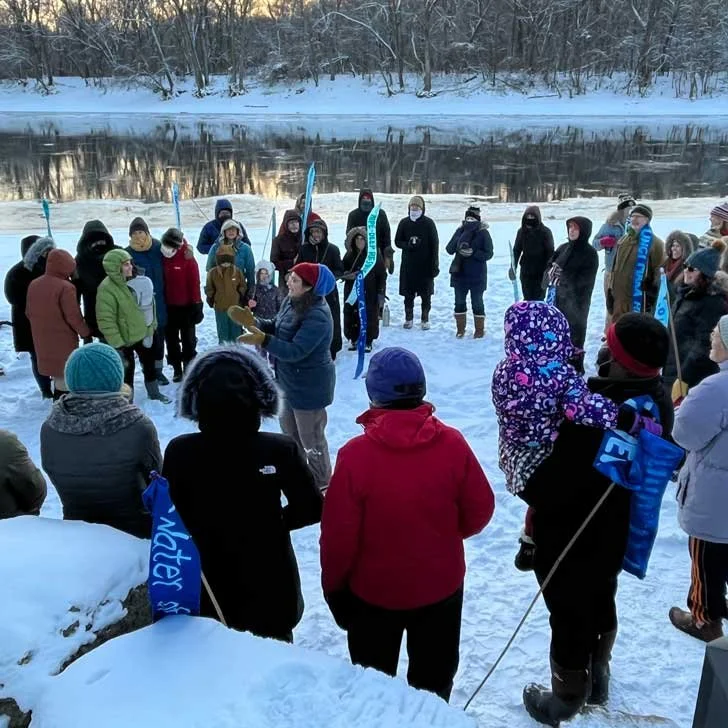
The Minnesota gathering. Photo by Art Shanty Projects.
