
TV Review: Being Gordon Ramsay;Manhunt: The Child Snatcher
I just watched two very different kinds of intensity on the telly: a substantial business venture in Being Gordon Ramsay, which seems reasonably important until you watch Netflix’s real-world horror Manhunt: The Child Snatcher.
Being Gordon Ramsay

Gordon Ramsay at 22 Bishopsgate
“Being” is the operative word here, or at least the one Brand Ramsay is trying to emphasise. This isn’t a show about recipes or about him having swear-offs with other chefs, but about Ramsay the man as he attempts to open five new restaurants at 22 Bishopsgate, in London (he already has 95 worldwide). Each is built from nothing, and already facing skyscraper rent: and as it keeps reminding us, 65% of new restaurants shut down within the first 18 months.
Which kind of pressures do, in fairness, make Ramsay’s usual bustling ambition and hands-on intensity more understandable than usual. It might also be why it shows him unwinding with his family: letting us know that he too is human, while slyly revealing just as much as he wants us to see, in the latest fashion for peek-at-celebrity-home-life documentaries.
It’s quite watchable, but mainly at the business end: I’m not sure if I’m just not that interested in Ramsay’s home life, or if it just felt a little too curated and polished to really engage. We know him better as the chef, and while I’m sure this was carefully edited too, it’s harder for him to stage-manage those deadlines and problems with food (and staff) standards; and some of the interviews even feel quietly revealing.
It’s a bit too much like a disjointed promotional vehicle to be completely successful, but it is at least a look at an unusually high-stakes, high-pressure venture as it happens. Still, six episodes? Next time, make it 90 minutes, and take the editing out of the Ramsay empire’s hands – judging by this perpetual-motion look at his life, he’s already too busy anyway.
Manhunt: The Child Snatcher
There are several reasons to be interested in Netflix’s new true crime documentary: it’s not made by Netflix itself, it’s only two episodes long, and it’s about the crimes and capture of the notorious Robert Black, a child killer whose name was even speculatively attached to Mary Boyle’s disappearance locally.
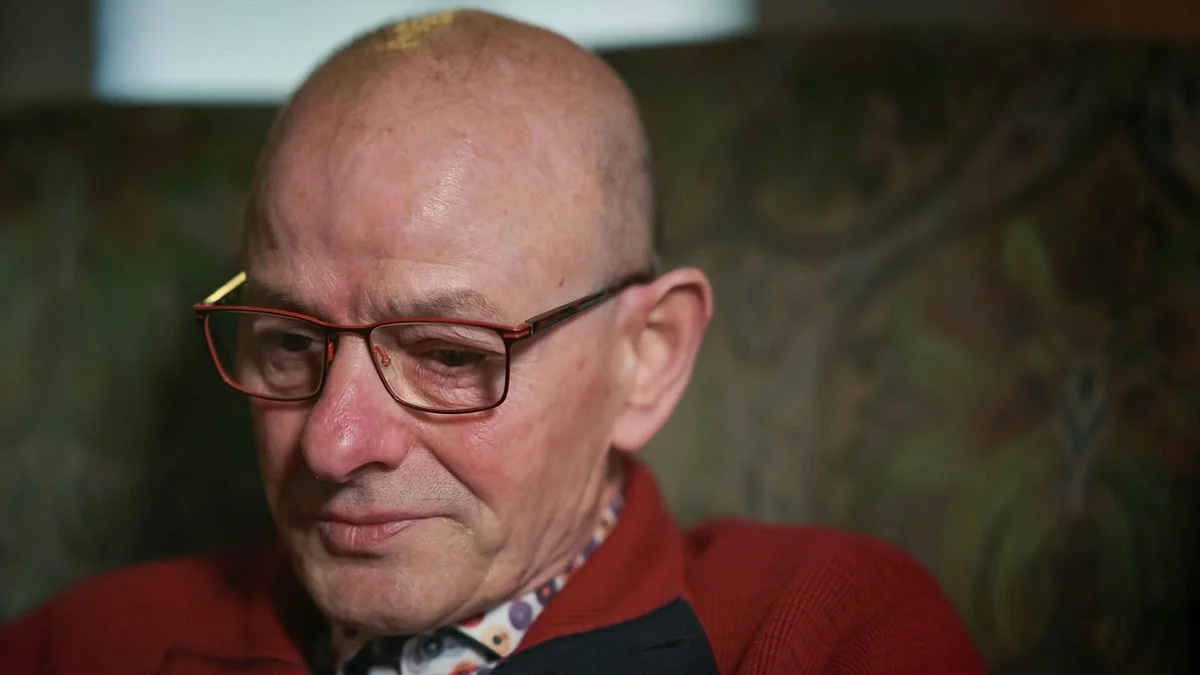
Andrew Cardy, who passed away in 2025
Black was a Scottish-born delivery driver, a job which let him travel widely and evade capture for years. He had abused young girls as far back as his teens, and has been linked to many more disappearances than he was ultimately convicted of. The four crimes he was caught for happened in the 1980s, though the breakthrough didn’t come until 1990 – and that exact moment, which kicks off the story here in the first episode, is so startling that if I’d seen it in a TV drama I would have found it too far-fetched.
In fact at this stage, early in the episode, I was having some doubts about it: it’s edited for drama, with long pauses and ominous music, as if the bare story was not enough already. But once it settles into the story, the tone settles too, and the horror sets in with the murders of Susan Maxwell, Caroline Hogg, Sarah Harper, and Jennifer Cardy. Jennifer’s father Andrew makes arguably the most significant contribution to the film, with an interview that, even 45 years after his 9-year-old daughter’s murder, shows just how painful it still is.
But it also works quite well as a grounded look at investigation, its missteps and its slow accumulation of clues; the interviews with the officers involved reveal not just procedural detail but the impact on them too. You sense that it was the most affecting case of their lives, and how heavy the sense is that Black’s guilt has never been fully discovered: he never showed remorse for the four girls he is known to have murdered, and died in Maghaberry prison in Northern Ireland in January 2016, just weeks before he was due to be charged with another murder. (After his death, a fellow inmate revealed that Black had confessed to even more.)
It’s a series flawed slightly by a dramatic framing, but it does a good job with the human stories and remains on the right side of exploitative.
