The (Pre-Christian) History Of Easter
Easter’s oldest symbols
The Feast
The celebration of Easter, like Christmas, goes further back than Christianity. In fact, it’s a near-universal celebration of springtime: the return of food, life, the sun. Easter takes its name ultimately from Ishtar, the Babylonian goddess of love and fertility. To the Phoenicians she was Astarte, and by the time her cult reached western Europe she was Eostre (or Ostara), the Anglo-Saxon goddess of spring, fertility, and the rising sun (she’s also the origin of the word oestrogen, the female hormone, which is also, of course, connected to fertility). Early Christian missionaries seeking to convert the tribes of northern Europe realised that the crucifixion of Jesus roughly coincided with their springtime celebrations, which of course emphasised the triumph of life over death. Through the process of syncretism, the Christian Easter gradually absorbed the traditional symbols.
Another important reason for the timing of Easter was that the earliest Christians were of Jewish origin, and were brought up with the tradition of the Passover. This is an eight-day springtime commemoration of the freedom of the Israelites from slavery in Egypt, and was known as Pesach. The Greek form of Pesach was Pasch, a word still used by some Europeans for Easter, and from which we derive Paschal, as in the Paschal Candle.
The specific dating of Easter, the archetypal movable feast, is an arcane, and still controversial thing, the cause of some dispute between Western and Eastern Christian churches. The Council of Nicea in 325 decided that “Easter is to fall upon the first Sunday after the first full moon on or after the Vernal Equinox.” But that’s as far as the definitions went; since then, the Eastern Church uses the actual, variable astronomical dates for the equinox and the full moon, while the Western Church uses a less accurate, unvarying set of figures: their equinox is always March 21st, for instance, and the “ecclesiastical” full moon is not the astronomical full moon but one based on tables created by the church. Easter can fall as early as March 22 or as late as April 25.
The Famine
The word Lent comes from Lencten, the old Anglo-Saxon word for Spring (or, literally, lengthening, because of the longer days). Lent, the fast, is a preparation for the feast of Easter, but requires two days’ preparation itself. The Catholic Ash Wednesday practice of sprinkling ash on the forehead was introduced by Pope Gregory the Great around 600 AD; the ash, of course, is from Palms burned on the previous year’s Palm Sunday. Shrove Tuesday became Pancake Tuesday as a way to use up ingredients –eggs, milk, fats – which would go off during the long fast of Lent. The word Shrove comes from Shrive, meaning “purity through repentance.”
The Lenten fast was first officially fixed at 36 days in the 4th century, then 40 days in the 7th century. This was to correspond to Christ’s 40 day fast in the desert (although some say that, in the original Hebrew, the word translated nowadays as “forty” simply meant “a large number”, the way we might today say “millions”). It’s a 46-day period, but the six Sundays are not officially counted, so, theologically, you can eat what you want on those days (there’s no good evidence, though, that Christ made a special allowance for the Irish on March 17th).
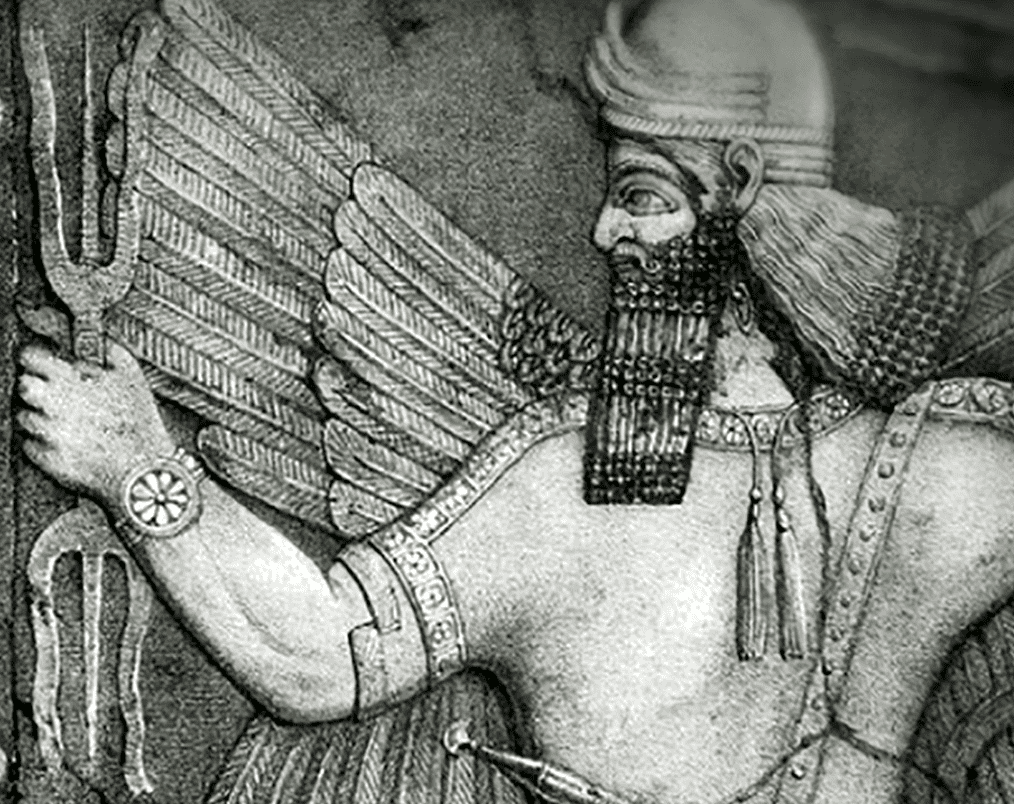
It’s a little strange to think, though, that Christ’s fast had nothing whatever to do with his death or resurrection; both events were years apart, so it’s somewhat strange connecting the two now. In fact, the 40-day penitence followed by the celebration of a resurrection also extends back into Babylonian times, where they had forty days of weeping for Tammuz. Tammuz, according to legend, was killed by a boar when he was forty years old, and a day for each year of his life was set aside for lamenting. Tellingly, Tammuz (who is mentioned disparagingly in Ezekiel 8:14) was a sun god who was resurrected from the dead, and Christ’s halo was originally the symbol of the sun; the two, predictably, were merged by early Christians. There are still Christian groups around the world who call for the abolition of Easter, since its origins are anything but Christian, and, I suppose, if you read what the Bible has to say about Babylon, it seems strange to be keeping alive a practice that originated there.
Tammuz, in healthier times
Holy Week, the last week of Lent, begins with Palm Sunday, the day of Christ’s entry into Jerusalem where the crowds laid palms at his feet. Holy Thursday commemorates the Last Supper, and is traditionally a day on which Kings and Queens gave out “maundy” money; this was a relic of Christ’s washing the apostles’ feet, but, since monarchs couldn’t wash everyone’s feet they dished out money instead. Good Friday, the anniversary of the Crucifixion, is the only day in the Catholic year that there is no mass, and traditionally a day on which no nails could be used, no crops could be planted, and no housework could be done. Fish, a symbol of Christ, was often eaten on this day. Easter itself is always on a Sunday because of its connection to the sun. An Easter Monday tradition which sadly died out in the 1800s involved women lifting men into the air to signify the opening of the tomb (it was also believed to reduce crockery breakages the following year).
The Food
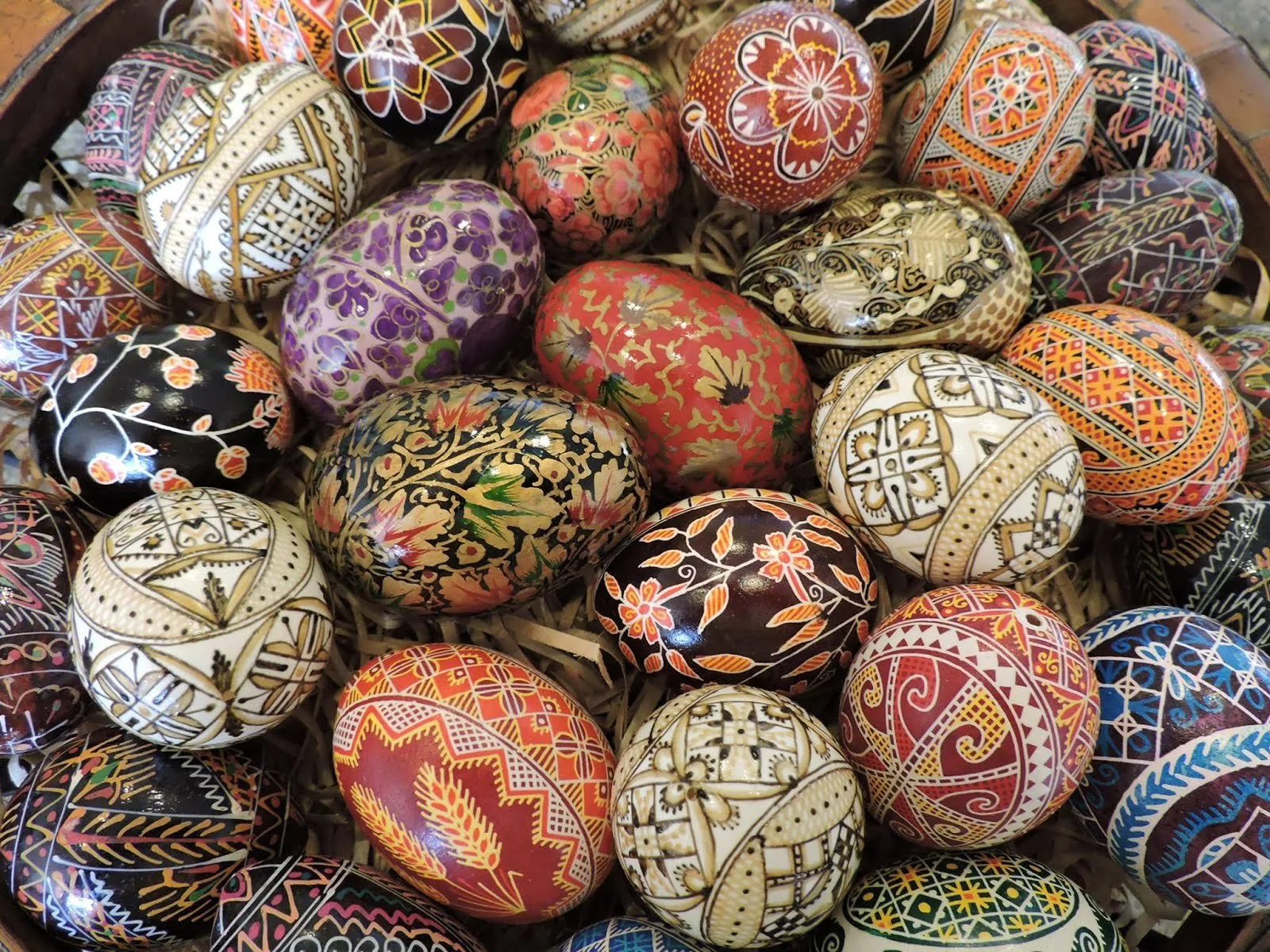
Eggs are the most obvious Easter foods, and have always been associated with rebirth and Spring. Nuns in ancient Rome would bring the new eggs to priests, who would bless them for distribution to the poor. However, their significance goes back into pagan times, when people would search for wild birds’ eggs for food, charms, and gifts. From this we derive the tradition of the Easter treasure hunt, and indeed the Easter basket, which is believed to have begun as a representation of a bird’s nest. Eggs were originally painted to represent the colours of Spring and the blood of Christ, and the first chocolate eggs were eaten in Germany in the early 1800s. The tradition of egg-rolling is said to represent the stone being rolled back from the tomb of Christ, but originally represented the sun’s path across the sky. There are many Easter traditions involving eggs, one of which was that, if a man carried an egg into church, he would be able to identify witches in the congregation (although, as the witches were said to carry strips of pork instead of prayer books, and wear milkpails instead of bonnets on their heads, it’s not clear how much help was needed to spot them).
Hot Cross Buns are said to represent the crucifixion, but existed long before that. The ancient Greeks and Romans used to make them from fresh grain and mark them with two sets of bulls’ horn. Shaped to represent the moon, their four quarters were the seasons of the year, and, like our hot cross buns, they were said to have mystical properties – they were made to honour goddesses like Artemis or Diana, though. The Saxons baked them in honour of the goddess Eostre, and the cross to them symbolised the phases of the moon.
The Festivities
Numerous activities have been associated with Easter in the past, but few remain. There was, for instance, the morris-dancing-mumming hybrid known as “pace egging”, in which costumed players loudly persuaded people to throw eggs or money into a basket held by their leader, known as “Old Tosspot”. Once the basket was full, they would perform a dance or short play. One of the activities still familiar to us is the custom of wearing white clothes or Easter bonnets, all of which celebrated purity, new life, and the casting off of the grim winter. The practice of “wearing your Sunday best” developed from this around a hundred years ago into a weekly, not a yearly, thing.
Not all practices were so innocent; with the emphasis on purity, it was also, about 400 years ago, a time for identifying witches, prostitutes, even gossipers, and publicly humiliating them. Cockfighting was also popular, as was a contest in which roosters were tied up and thrown as far as possible. Gradually, as people saw the cruelty in what they were doing, daffodils were used to replace the birds, mainly because of their old alternative name, “Leny cocks”.
The Flora And The Fauna
Daffodils, of course, were not roosters. But neither are they lilies, even though a variety of daffodil is called the Lent Lily. Lilies are associated with purity and innocence, as are many plants connected to Easter, mainly because they start appearing at this time of year. Others have been woven into the story of the crucifixion: oak used as the cross, hawthorn as the crown of thorns (both of these are said to be unlucky at this time of year), and vervain used to staunch the blood (it was used for this purpose by the Roman armies), for instance.
Similar things can be said about the animals associated with Easter. Chicks and lambs are all highly visible new life (it helps that chicks come from eggs and lambs suggest shepherds, important figures in Christian iconography). Other animals are part of the folklore: donkeys carried Christ into Jerusalem, gaining a pale cross on their backs for their services, and robins got their red breast from trying to pluck thorns from Christ’s head. Less familiar as an “Easter” bird now is the swallow, but its name has an interesting source: according to Danish folklore, the bird flew around Christ’s head during the crucifixion, shouting “svale” (meaning “cheer up” - a somewhat unserviceable exhortation in the circumstances), and gradually this mutated into “swallow”. Plovers, meanwhile, were traditionally connected in two separate ways to Easter. Firstly, it was a rather lonely bird said to contain the souls of all the Jews who crucified Christ, and secondly, it is happy to lay its eggs in nests (forms) abandoned by hares, giving rise to the old myth that hares used to lay eggs.
The hare and rabbit, of course, have been conflated into the Easter bunny, the quintessential Easter figure. Both were traditionally regarded as signs of Spring, and as symbols of fertility, and, importantly, the rabbit was Eostre’s favourite animal and her symbol on Earth. Chocolate hares were first eaten in the 1800s in Germany, where the hare became a sort of Santa Clause figure, “Oschter Haws” who would lay a nest of coloured eggs if children were good. Also like Santa Clause, this was a local custom taken to America by Dutch and German immigrants in the 1700s; from there, like Santa, it was exported back to Europe as the colourful figure we recognise today.